



Industrial Farm Waste Shredder Factory: Heavy-Duty Biomass Solutions
Motor Power: High-Efficiency Brushless DC (BLDC)
Max Airflow Ultra-High: Rated Airflow Volume
Feed Shredder Manufacturer & Wholesale Supplier for Small Farms
Reliable, compact, and cost-effective feed processing solutions tailored for distributors and agricultural equipment dealers in South America.
Empowering Smallholder Agriculture in Argentina & Chile
Zenterest supplies high-quality, compact feed shredders to distributors, wholesalers, and agricultural equipment dealers serving small farms across South America, with a core focus on Argentina and Chile.
These are small-scale machines, designed with deliberate purpose. Your end customers are not running massive commercial feedlots or industrial biomass plants—they need a feed shredder that fits comfortably in their shed, operates on their existing power supply, and efficiently converts straw, stalks, and farm leftovers into nutritious feed at an affordable price point.

-
![Farm Waste Shredder]()
-
![Dry Forage Shredder]() Dry Forage ShredderHeavy-Duty Dry Forage Shredder Factory: High-Efficiency Straw Crusherread more
Motor Power: High-Efficiency Brushless DC (BLDC)
Max Airflow Ultra-High: Rated Airflow Volume -
![Wet Feed Shredder]() Wet Feed ShredderIndustrial Wet Feed Shredder: High-Capacity Processing for High-Moisture Organic Waste & Fodderread more
Motor Power: High-Efficiency Brushless DC (BLDC)
Max Airflow Ultra-High: Rated Airflow... -
![Fruit and Veg Shredder]() Fruit and Veg ShredderPrecision Fruit And Veg Shredder: Food-Grade Stainless Steel Processing Equipment for High-Yield Productionread more
Motor Power: High-Efficiency Brushless DC (BLDC)
Max Airflow Ultra-High:... -
![Multifunctional Feed Shredder]() Multifunctional Feed ShredderIndustrial Multifunctional Feed Shredder: All-in-One Solution for Grains, Straw, and Fodder Processingread more
Motor Power: High-Efficiency Brushless DC (BLDC)
Max Airflow Ultra-High: Rated...


What Is a Feed Shredder?
A feed shredder is a machine that breaks down dry forage, straw, corn stalks, crop residue, and other fibrous plant material into small, loose, easy-to-feed pieces. Buyers also search for it as a straw shredder, fodder shredder, animal feed shredder, hay shredder, or crop residue shredder. Different names, same purpose: make rough, bulky material usable as livestock feed.
For a small farmer, the value is practical. Material that was once left in the field, burned, or fed poorly becomes a feed source. Shredded material is easier for animals to eat and digest, takes up less storage space, and wastes less. And a machine replaces hours of hard manual work.
Feed Shredder vs. Feed Chopper: What Is the Difference?
Distributors are often asked this question, and a clear answer helps you sell the right machine. A feed chopper or forage chopper typically cuts forage into short, even lengths and works well on hay, fresh grass, and green fodder. A feed shredder typically works on tougher, drier, and more fibrous material, such as straw, stalks, and crop residue, breaking it down into smaller, softer pieces.
In practice, many small farms need both, depending on what they grow and what they feed. That is one reason a one-stop supplier is valuable. Through Zenterest, you can source feed shredders, forage choppers, feed cutting machines, and farm food processors in one order and recommend the right tool for each customer's material.
Our Feed Shredder Range
Small farms handle different materials, so no single shredder suits everyone. Through our factory network, you can source the full range together:
| Model | Typical Customer | What It Solves |
|---|---|---|
| Dry Forage Shredder | Small cattle, sheep, and goat farms with straw and dry fodder | Breaks down dry straw and hay into soft, feed-ready pieces. |
| Farm Waste Shredder | Mixed family farms with crop residue and plant leftovers | Turns stalks and farm waste into feed, bedding, or compost material instead of discarding it. |
| Wet Feed Shredder | Farms handling high-moisture fodder and green material | Processes wet material that tends to clog dry-material machines. |
| Fruit and Veg Shredder | Small farms near produce markets and orchards | Converts surplus fruit and vegetables into livestock feed. |
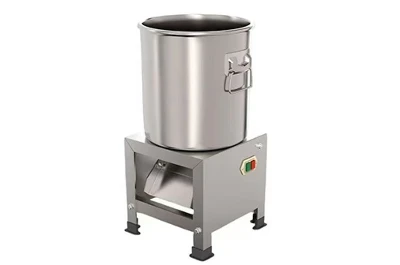
| Multifunctional Feed Shredder | Smallholders who want one machine for several jobs | Handles straw, stalks, and mixed fodder in a single machine, replacing multiple tools. |
Capacity, power, and blade design vary by model. Tell us your customers' animals and materials, and we will recommend the right machines.
The Problems B2B Buyers Face, and How We Solve Them
Reliable solutions for distributors and agricultural equipment dealers in South America.
1. Thin margins in a price-sensitive small-farm market
Small farmers compare prices carefully. If your landed cost is too high, you either price yourself out of the market or hold stock at margins that barely justify it. Importers who buy single units or small batches from a factory often pay more than they should.
Because we consolidate orders across more than a dozen factories, we secure volume pricing that individual buyers cannot reach alone. In many cases our price is lower than a direct factory quote. That gives you a lower landed cost, room to quote competitively, and healthier margins on every sale.
2. Equipment that is too big, too complex, or too expensive
Many shredders on the market are built for biomass processing or large commercial operations. They are heavy, costly, and sometimes need three-phase power. Most small farms cannot use them, so oversized stock sits on your shelf.
Our feed shredders are compact, simple to operate, and designed for standard 220V single-phase supply, which matches the power available on many farms in Argentina and Chile. They are intended to fit in a workshop corner or small shed and be maintained with basic tools.
3. Selling the wrong shredder for the material
Dry straw, wet green fodder, and fruit and vegetable surplus behave very differently. A machine built for dry material may clog on wet feed, and a general machine may struggle with tough stalks. A wrong match means returns and lost customer trust.
Our five-model range lets you match the machine to the material. You can offer a dry forage shredder for straw, a wet feed shredder for moist fodder, a fruit and veg shredder for produce surplus, and a multifunctional model for mixed use, all from one supplier.
4. Fast blade wear and breakdowns on abrasive material
Dry straw and stalks, often carrying soil and grit, wear blades and hammers quickly. Poor steel or weak assembly leads to dull shredding, vibration, and early failure, and the farmer blames the dealer.
We choose factories according to product type and act as your single accountable partner for the order. Specifications are confirmed before production, and machines are inspected and tested before shipment. We can also discuss supplying wear parts such as blades with your machine order, so your customers can keep their machines running.
5. Seasonal demand and late deliveries
Shredder demand rises after harvest, when crop residue is available and farmers want to prepare feed for the dry season. A late shipment means missing that window. Small importers are usually the first to be delayed when factories are busy.
Consolidated orders give us priority production slots, and our network provides backup capacity when a factory line is full. Standard models typically ship within 15 to 30 days and customized orders within 30 to 45 days, so you can stock ahead of the season.
6. Safety, dust, and ease of use
Shredding dry material produces dust and flying debris, and a poorly designed feed opening is a safety risk. End users are often family members without formal training, so ease and safety matter.
Tell us how your customers will use the machine, and we will discuss models with suitable feed openings, guards, and simple controls. Easy, safe operation reduces complaints and supports your reputation.
7. High minimum orders and the risk of entering a new category
Many importers hesitate to add a new product because the starting order is too large. A container of a single model is a heavy commitment when you are not yet sure which shredders will sell.
Our MOQs generally start from 10 to 20 units depending on the model, and mixed-model containers are welcome. You can combine several feed shredders, or even add feed choppers and exhaust fans, to test the market with manageable quantities and share freight cost across products.
8. Machines and paperwork that do not fit your market
Voltage, plug type, language, and packaging differ between countries. A machine with the wrong configuration or a manual in the wrong language slows sales and creates support requests.
We offer OEM and ODM support, including private labeling, custom colors, voltage adaptation, branded packaging, and manuals in Spanish, Portuguese, or English, so your machines arrive ready to sell under your name.
9. Too many suppliers and too much coordination
Dealers who source shredders, choppers, and cutters from separate factories spend valuable time on quotes, samples, and shipping. Every additional supplier adds cost and risk.
Zenterest provides one-stop service: product consultation, OEM customization, quality inspection, logistics coordination, and after-sales support. You deal with one team for the whole feed processing category.
10. Export paperwork and communication gaps
Importing involves more than the product. Unclear specifications, missing documents, and slow replies can delay shipments as much as a factory problem. This is hardest for buyers who are new to sourcing from China.
With nearly a decade of export experience, we know what overseas buyers need: clear specification sheets, accurate packing details, responsive communication, and support with shipping documentation. We reply to inquiries within 24 hours with recommended models, pricing, and MOQ tiers.
Why Zenterest: Our Strength Behind the Price
Many suppliers claim to be factory-direct. Our advantage is structure.
- A network of more than a dozen specialized factories. We are not tied to one production line, so we match the right machine to your request.
- Consolidated ordering power. Combined orders earn volume discounts and priority production slots that individual buyers cannot access, which is why our pricing can beat even a direct factory quote.
- Nearly a decade of export experience. Our team understands overseas buyers, shipping, and the documentation behind each order.
- One-stop service. From product advice to OEM customization, inspection, logistics, and after-sales support.
- A focus on small farms. Our machines are built for small-scale use, which matches the real needs of customers in Argentina, Chile, and across South America.
Built for Argentina and Chile
In Argentina, thousands of small and medium family farms raise cattle, sheep, goats, and poultry on modest land, and many grow crops that leave behind straw and stalks after harvest. In Chile, small livestock farms and vegetable and fruit producers also generate plant material that can become feed. Our compact feed shredders are designed for these customers, and our team can advise which models suit each region's typical materials and animals.
We ship to Argentina and Chile regularly and can quote FOB, CIF, or DDP terms, depending on how much of the logistics you want us to handle.
How to Choose a Feed Shredder for Your Market
The right model depends on your customers. These points help you compare options, and our team can guide you through each one.
| Specification | Why It Matters to Your Buyers |
|---|---|
| Material type | Dry straw, wet fodder, stalks, and produce surplus each need different blade and feed designs. |
| Capacity | Should match the herd size and daily feed volume. Oversized machines cost more, and undersized ones slow the routine. |
| Output fineness | Different animals and uses call for different particle sizes. |
| Power supply | Standard 220V single-phase supply suits most small farms in the target markets. |
| Blade and wear parts | Determines shredding quality and how easily blades can be sharpened or replaced. |
| Safety and dust control | Feed opening, guards, and dust handling matter for family operators. |
| Size and weight | Compact design suits small sheds and makes the machine easier to move, store, and ship. |
| Packaging and branding | Strong packaging protects goods in transit, and branding options help you sell under your name. |
Who We Work With
- Distributors and wholesalers in Argentina, Chile, and wider South America serving small-farm customers.
- Agricultural equipment dealers and retailers who want affordable machines with strong margins.
- Cooperatives and farm supply companies buying in volume for members.
- Brands and importers looking for an OEM feed shredder supplier with flexible sourcing.
What to Include in Your Inquiry
The more detail you provide, the faster we can send an accurate quote:
- Your business type and target market, such as Argentina or Chile
- Models of interest: dry forage, farm waste, wet feed, fruit and veg, or multifunctional shredder
- Animals, materials to be shredded, and typical farm size
- Voltage, plug standard, and manual language
- Estimated order quantity and target price range
- Branding, packaging, or spare part needs
- Destination port and preferred trade terms
How Ordering Works
- Send your inquiry. Share your requirements through the form or by email.
- We match and quote. We select suitable models from our factory network and reply within 24 hours with pricing and MOQ tiers.
- Confirm samples and details. Specifications, branding, and packaging are agreed before production.
- Production and shipment. We coordinate manufacturing, inspection, and export so your order arrives as planned.
Frequently Asked Questions
Are your feed shredders suitable for small farms?
Yes. They are compact, easy to operate, and designed for small farms, family workshops, and rural households. They are not intended for large commercial feedlots or industrial biomass plants.
What is the difference between a feed shredder and a forage chopper?
A forage chopper typically cuts hay and green fodder into short lengths, while a feed shredder typically breaks down tougher, drier material such as straw and stalks into smaller, softer pieces. Tell us what your customers feed and we will recommend the right machine.
What is the minimum order quantity?
MOQ varies by model and generally starts from 10 to 20 units. Sample orders for evaluation are available. Contact us for specifics.
Can you customize machines with our brand?
Yes. We offer OEM and ODM services, including private labeling, custom colors, voltage adaptation, branded packaging, and localized documentation.
Can you really offer better prices than the factory?
Because we consolidate orders across more than a dozen factories, we secure volume discounts and priority production that individual buyers often cannot. Send your requirements and we will provide a quote you can compare.
Can I mix different models in one container?
Yes. Mixed-model and mixed-product orders are welcome and help reduce shipping cost per unit.
Request a Quote for Feed Shredders
Tell us which models you need and the market you are selling into. We will reply within 24 hours with recommended models, pricing, and MOQ tiers.
Contact Zenterest TodayWith abundant experience, we are one of the most professional feed shredder manufacturers and suppliers in China. Please feel free to wholesale high quality feed shredder made in China here from our factory. We also accept customized orders.
Dry Forage Shredder, Farm Waste Shredder, Multifunctional Feed ShredderPopular Products
-
![Side Mount Kitchen Exhaust Fan]() Side Mount Kitchen Exhaust FanHigh-Static Side Mount Kitchen Exhaust Fan | External Wall Blower Factoryread more
Motor Power: High-Efficiency... -
![Wall Mounted Kitchen Extractor Hood]() Wall Mounted Kitchen Extractor HoodHeavy-Duty Wall Mounted Kitchen Extractor Hood | Stainless Steel Sourcing Factoryread more
Motor Power:... -
![Wall Extractor Hood]() Wall Extractor HoodCommercial-Grade Wall Extractor Hood | Stainless Steel Range Hood Manufacturerread more
Motor Power: High-Efficiency... -
![Wall Mounted Kitchen Hood Exhaust Fan]() Wall Mounted Kitchen Hood Exhaust FanHeavy-Duty Wall Mounted Kitchen Hood Exhaust Fan | Stainless Steel Sourcing Factoryread more
Motor Power:...


Send Inquiry