

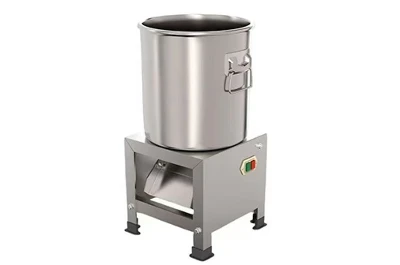


Industrial-Grade Hay Chopper: High-Throughput Straw & Alfalfa Cutting for Professional Forage Processing
Motor Power: High-Efficiency Brushless DC (BLDC)
Max Airflow Ultra-High:...
Zenterest supplies compact forage choppers to distributors, wholesalers, and agricultural equipment dealers serving small farms in South America, with a particular focus on Argentina and Chile. Our forage chopper collection includes hay choppers, silage choppers, household forage choppers, and mini forage choppers, all built for the daily feed preparation needs of family farms and small livestock operations.
These are small-scale machines. They are designed for smallholders, family farms, and rural workshops, not for large commercial feedlots. That focus is what makes them sell: your customers want a machine that fits their budget, their barn, and their herd, not an oversized system built for an operation they do not run.
As a B2B partner, Zenterest offers one-stop sourcing for the whole small-farm feed processing category: forage choppers, feed choppers, feed cutting machines, feed shredders, and farm food processors. We are backed by more than a dozen specialized factories and nearly a decade of export experience. By consolidating orders across that network, we secure volume discounts and priority production slots, which allows us to offer prices that buyers often cannot obtain even by contacting a factory directly. We also accept customized orders.

Forage Chopper Manufacturer & Wholesale Supplier for Small Farms
Compact Hay & Silage Chopping Solutions for Argentina, Chile & South America
REQUEST FACTORY QUOTE-
![Hay Chopper]()
-
![Silage Chopper]() Silage ChopperIndustrial Silage Chopper: High-Velocity Green Forage Processing for Optimal Fermentation Qualityread more
Motor Power: High-Efficiency Brushless DC (BLDC)
Max Airflow Ultra-High: Rated Airflow... -
![Household Forage Chopper]() Household Forage ChopperCompact Household Forage Chopper: Plug-and-Play Mini Fodder Cutter for Small-Scale Farmingread more
Motor Power: High-Efficiency Brushless DC (BLDC)
Max Airflow Ultra-High: Rated Airflow Volume -
![Mini Forage Chopper]() Mini Forage ChopperWholesale Mini Forage Chopper: High-Density Logistics Design & Multi-Power Adaptabilityread more
Motor Power: High-Efficiency Brushless DC (BLDC)
Max Airflow Ultra-High: Rated Airflow Volume


What Is a Forage Chopper?
A forage chopper is a machine that cuts hay, straw, grass, corn stalks, and other forage crops into short, uniform pieces for livestock feed. Livestock chew and digest chopped forage more easily, and farmers waste less feed because animals cannot pick out only the softest parts and leave the rest behind.
On a small farm, a forage chopper replaces slow and tiring hand cutting with a task that takes minutes. It lets a single operator prepare a day's feed quickly and consistently, which matters when labor is limited and animals must be fed every day.
Buyers search for this equipment using many names, including forage cutter, fodder chopper, chaff cutter, grass chopper, hay cutter, and mini fodder cutter. Our collection covers these needs, and our team can help you match the right machine to each customer's feed type.
Our Forage Chopper Collection
Different farms feed different materials, so one model does not suit everyone. Through our factory network, you can source the full range in one order:


Custom Matching: Capacity, power source, and blade design vary by model. Tell us your customers' herd size and feed type, and we will recommend suitable machines. Custom requirements are welcome.
Who Uses Forage Choppers, and Why Your Customers Buy
The end users in your market are typically small livestock keepers who prepare feed every day. Common customers include:
● Family farms raising cattle, sheep, goats, or horses
● Small dairy producers who feed fresh green forage
● Farmers who grow their own hay, corn, or grass and need to process it
● Rural households and hobby farms with a few animals
● Cooperatives and small workshops preparing feed for local members
For these customers, the buying decision is simple: does the machine save time, run reliably, and cost a price they can afford? Distributors who can answer yes to all three build a loyal customer base and repeat business.
The Problems B2B Buyers Face, and How We Solve Them
1 Thin margins in a price-sensitive small-farm market
Small farmers watch every purchase carefully. If your landed cost is too high, you either price yourself out of the market or accept margins that barely justify holding stock. Importers who buy single units or small batches from a factory often pay more than they should.
Our Solution: Our factory network changes this. Because we consolidate orders across more than a dozen factories, we secure volume discounts that individual buyers cannot reach alone. In many cases our price is lower than what a customer would receive by contacting the factory directly. That gives you a lower landed cost, room to quote competitively, and healthier margins.
2 Machines that are too large, too complex, or too expensive
Many choppers on the market are designed for commercial operations. They are heavy, powerful, and costly, and most small farms simply do not need them. Selling oversized equipment to small farmers leads to slow sales and unhappy customers.
Our Solution: Our focus is compact, small-capacity forage choppers designed for the way small farms actually work. These machines are intended to fit in a modest barn or shed, run without specialist training, and handle daily feed preparation without industrial-scale cost.
3 Choosing the wrong machine for the feed type
Dry hay, fresh grass, and corn stalks behave very differently. A machine suited to dry forage may clog on wet green material, and a machine built for silage may be more than a hay farmer needs. Selling the wrong model creates returns and damages trust.
Our Solution: Our team helps you match models to materials, whether your customers need a hay chopper, a silage chopper, or a compact household forage chopper. Send us the feed type and herd size, and we will recommend suitable options, reducing the risk of costly mismatches.
4 Inconsistent quality, weak blades, and early breakdowns
A forage chopper depends on its blades, motor, and frame. Poor steel, loose assembly, or underpowered motors lead to dull cutting, jamming, and early failures. When that happens, the farmer blames the dealer who sold it.
Our Solution: We choose factories according to product type and act as your single accountable partner for the order. Specifications are confirmed before production begins, and we coordinate inspection before shipment. Instead of managing several factories yourself, you rely on one team to follow your order through.
5 Unreliable delivery during feeding and harvest seasons
Farm equipment sells in seasons. A late shipment means missing the weeks when customers are ready to buy. Smaller importers are usually the first to be delayed when factories are busy.
Our Solution: Consolidated orders give us priority production slots, and our network provides backup capacity when a particular line is full. This is designed to keep your delivery schedule predictable and help you stock up before demand peaks.
6 High freight and storage costs for bulky machines
Shipping costs can erase the margin on equipment, especially for bulky products. Distributors also need to store and display stock without taking too much warehouse space.
Our Solution: Compact models, such as our mini forage chopper, are well suited to efficient packing and easier handling. Tell us your container plans and we can discuss packaging and loading arrangements that help you keep landed costs under control.
7 Too many suppliers for a small product range
A dealer who sources hay choppers from one factory, silage choppers from another, and feed shredders from a third spends valuable time on quotes, samples, and shipping. Every additional supplier adds cost and communication risk.
Our Solution: Zenterest provides one-stop service for this category. You can combine forage choppers, feed choppers, feed cutting machines, feed shredders, and farm food processors in one order, deal with one team, and simplify your purchasing and shipping.
8 Machines that do not fit local requirements
Voltage, frequency, plug type, and power source differ between markets, and farmers in remote areas may need options that suit the power they have available. A mismatch causes rework, returns, and delays.
Our Solution: Share your market requirements early in the inquiry. We will discuss suitable models and customization options, including branding, nameplates, and packaging, so the machines arrive ready to sell in Argentina, Chile, or elsewhere in South America.
9 Spare parts, blades, and after-sales worries
Farmers want to know that a machine can be kept running. Blades wear, belts need replacing, and a machine that cannot be maintained loses the dealer's customer for good.
Our Solution: Tell us which wear parts your customers will need. We can discuss supplying blades and common spare parts alongside your machine order, so you can offer a complete solution and build repeat business.
10 Export paperwork and communication gaps
Importing involves more than the product. Unclear specifications, missing documents, and slow replies can delay shipments as much as a factory problem. This is hardest for buyers who are new to sourcing from China.
Our Solution: With nearly a decade of export experience, we know what overseas buyers need: clear specification sheets, accurate packing details, responsive communication, and support with shipping documentation. We reply to inquiries within 24 hours with recommended models, pricing, and MOQ tiers.
Why Zenterest: Our Strength Behind the Price
Many suppliers claim to be factory-direct. Our advantage is structure.
- A network of more than a dozen specialized factories: We are not tied to one production line, so we can match the right machine to your request.
- Consolidated ordering power: Combined orders earn volume discounts and priority production slots that individual buyers cannot access, which is why our pricing can beat even a direct factory quote.
- Nearly a decade of export experience: Our team understands overseas buyers, shipping, and the paperwork behind each order.
- One-stop service for the category: Forage choppers, hay choppers, silage choppers, feed cutting machines, feed shredders, and farm food processors, sourced together.
- Customization on request: We accept customized orders, including branding and packaging.
- A focus on small farms: Our products are built for small-scale use, which matches the real needs of customers in Argentina, Chile, and across South America.
The outcome is lower cost for you, reliable supply, fewer suppliers to manage, and a partner who stays involved after the order is placed.
How to Choose a Forage Chopper for Your Market
The right model depends on your customers. These points help you compare options, and our team can guide you through each one.
| Specification | Why It Matters to Your Buyers |
|---|---|
| Feed material | Dry hay, fresh grass, and corn stalks each need suitable blade and feed designs. |
| Capacity | Should match the herd size. Oversized machines cost more, and undersized machines slow the daily routine. |
| Power source | Electric or other options depend on the farm's power availability. |
| Blade quality | Determines cutting quality, jamming, and how often blades need replacing. |
| Safety and ease of use | Feed opening, guards, and simple controls matter for family operators. |
| Size and weight | Compact design suits small barns and makes the machine easier to move, store, and ship. |
| Electrical standard | Voltage, frequency, and plug type must match your destination market. |
| Packaging and branding | Strong packaging protects goods in transit, and branding options help you sell under your name. |
Who We Work With
- Distributors and wholesalers in Argentina, Chile, and wider South America serving small-farm customers.
- Agricultural equipment dealers and retailers who need affordable machines with strong margins.
- Cooperatives and farm supply companies buying in volume for members.
- Brands and importers looking for an OEM forage chopper supplier with flexible sourcing.
What to Include in Your Inquiry
The more detail you provide, the faster we can send an accurate quote:
- Your business type and target market, such as Argentina or Chile
- Machine type: hay chopper, silage chopper, household forage chopper, or mini forage chopper
- Materials your customers process and typical herd size
- Preferred power source, voltage, and plug standard
- Estimated order quantity and target price range
- Branding, packaging, or spare part needs
- Destination port
How Ordering Works
1
Send Your Inquiry
Share your requirements through the form or by email.
2
We Match and Quote
We select suitable machines from our factory network and send pricing and MOQ tiers.
3
Confirm Samples & Details
Specifications, branding, and packaging are agreed before production.
4
Production & Shipment
We coordinate manufacturing, inspection, and export so your order arrives as planned.
Frequently Asked Questions
Are your forage choppers suitable for large commercial farms?
Our machines are compact and designed for small farms, family operations, and rural workshops. They are not intended for large commercial feedlots. This focus keeps them affordable and easy to use for the customers you serve.
Can you really offer lower prices than the factory?
Because we consolidate orders across more than a dozen factories, we secure volume discounts and priority production that individual buyers often cannot. Send us your requirements and we will provide a quote you can compare.
What is the difference between a hay chopper and a silage chopper?
A hay chopper is typically used for dry forage such as hay, straw, and alfalfa. A silage chopper is typically used for fresh green forage and crop stalks that will be fermented as silage. Tell us what your customers feed and we will recommend the right model.
What is the minimum order quantity?
MOQ depends on the model and customization. Our order consolidation can help importers who are not yet ordering container volumes. Send us your target quantity and we will advise.
Do you accept customized or OEM orders?
Yes, we accept customized orders and can discuss branding, packaging, and specification adjustments. Contact us to confirm what is possible for your chosen model.
Can I mix different machines in one order?
In many cases, yes. One-stop sourcing lets you combine forage choppers, feed choppers, feed cutting machines, feed shredders, and farm food processors to simplify purchasing and shipping. Send your list and we will confirm what can be combined.
Request a Quote for Forage Choppers
Tell us which models you need and the market you are selling into. We will reply within 24 hours with recommended models, pricing, and MOQ tiers. Better prices, reliable supply, and one partner for the whole category start with a single inquiry. Contact Zenterest today.
CONTACT US NOWWith abundant experience, we are one of the most professional forage chopper manufacturers and suppliers in China. Please feel free to wholesale high quality forage chopper made in China here from our factory. We also accept customized orders.
forage chopper, Hay Chopper, Mini Forage ChopperPopular Products
-
![Side Mount Kitchen Exhaust Fan]() Side Mount Kitchen Exhaust FanHigh-Static Side Mount Kitchen Exhaust Fan | External Wall Blower Factoryread more
Motor Power: High-Efficiency... -
![Wall Mounted Kitchen Extractor Hood]() Wall Mounted Kitchen Extractor HoodHeavy-Duty Wall Mounted Kitchen Extractor Hood | Stainless Steel Sourcing Factoryread more
Motor Power:... -
![Wall Extractor Hood]() Wall Extractor HoodCommercial-Grade Wall Extractor Hood | Stainless Steel Range Hood Manufacturerread more
Motor Power: High-Efficiency... -
![Wall Mounted Kitchen Hood Exhaust Fan]() Wall Mounted Kitchen Hood Exhaust FanHeavy-Duty Wall Mounted Kitchen Hood Exhaust Fan | Stainless Steel Sourcing Factoryread more
Motor Power:...


Send Inquiry