


When I started designing wet feed shredders nearly a decade ago, I often heard two common complaints from livestock farmers and feed mill operators: first, that wet, rotting feed byproducts or fresh forage would clog lesser shredders, and second, that every piece of equipment in a processing line worked in isolation—adding extra steps, labor, and waste. At the time, most wet-processing operations relied on separate machines for shredding, mixing, and transporting, which meant operators spent hours moving material between stations, and a single breakdown could halt an entire shift. That’s why, over the years, my team at our wet feed shredder line has focused on building units that don’t just shred wet material—they integrate smoothly into existing production lines. Today, I want to walk through how that works, the challenges we’ve solved, and what to look for if you’re wondering if a wet feed shredder can fit into your own workflow.
First, let’s ground this in what “wet feed” actually means for production lines. Wet feed ranges from fresh silage, brewer’s spent grains, and food-grade fruit and vegetable scraps to slightly spoiled farm crop residues that still have high moisture content (usually between 40% and 70%). Unlike dry forage, which is crisp and easy to break into uniform pieces, wet feed is sticky, stringy, and often clumps together—properties that can jam standard shredders and throw off a production line’s consistency. For a line to work, every machine has to sync: shredders need to deliver material of a specific size, at a steady rate, so mixers can blend it evenly, and conveyors can move it without backup. Early versions of wet shredders we tested couldn’t do that; they’d either produce oversized chunks that clogged mixers, or generate too much fine dust (even in wet material) that would stick to conveyor belts. That’s why we engineered our units with variable-speed feed augers and replaceable, serrated blades—adjustable to match the output of other line equipment, like our [Farm Waste Shredder] or [Fruit and Veg Shredder], which are designed for similar wet material profiles.
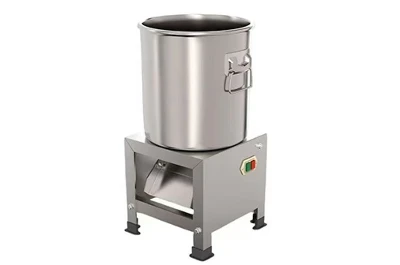
A big myth I still hear from operators is that wet feed shredders are too bulky or require custom line modifications. Let’s be clear: modern integration doesn’t mean redoing your entire facility. Most of our wet feed shredder models are built as line-compatible modules, designed to slot between a pre-processing conveyor and a mixing station without extra structural work. For example, our flagship wet feed shredder has a hopper that connects directly to standard belt conveyors (12-inch and 18-inch widths, which are industry standard for feed lines) and a discharge chute that fits into mixing tanks or pelletizing machines. We even offer a horizontal variant for operations with low ceiling space, which mounts to the same frame as adjacent mixing equipment. Last year, a mid-sized dairy farm in Iowa added our wet feed shredder to their existing silage processing line. Before that, they had to unload silage into a temporary bin, move it to a separate shredder, then transport it to the mixer—three steps, two laborers, and 20 minutes of downtime each load. With the integrated setup, they now feed silage directly from their silage pile conveyor into the shredder, which discharges straight into the mixer. They cut their per-load processing time by 70% and reduced labor needs for that step by one full person. That’s the kind of return on investment that makes integration worth the upfront conversation.
Of course, integration depends on more than just physical fit—it’s about material consistency and waste reduction. A production line only works if every machine delivers uniform output, and wet feed’s moisture can throw that off. Too often, wet shredders process material unevenly: some pieces are too large for mixing, others are ground too fine and turn into a slimy mess that clogs pelletizing dies. Our wet feed shredder addresses this with a screen basket system that’s interchangeable—operators can swap screens to adjust particle size from ¼-inch to 2 inches, depending on the next step. For example, if you’re producing a high-moisture feed for livestock, you can use a 1-inch screen to get consistent chunks that mix evenly with grains; if you’re processing wet feed into animal bedding, you can use a coarser 2-inch screen. This flexibility means the shredder works with almost any downstream equipment—whether that’s a mixer, a conveyor to a storage silo, or a pellet press. We also pair each shredder with a moisture sensor (an optional add-on) that adjusts blade speed in real time. If the feed is extra wet (like fresh fruit scraps that are 70% moisture), the sensor slows the blades slightly to avoid clumping, and if it’s on the drier end of the wet spectrum (like slightly wilted forage), it speeds up to keep output steady. This syncs the shredder’s performance to the rest of the line, so there’s no bottleneck from uneven material.


Another key factor for integration is hygiene—critical for operations handling food-grade wet feed, like the [Fruit and Veg Shredder] lines we supply to produce animal feed from grocery store produce discards. Wet feed, especially food scraps, can harbor bacteria like E. coli if not processed and cleaned properly between batches. Our wet feed shredders are built with stainless steel contact surfaces, and the entire unit disassembles without tools for easy cleaning. That means you can switch between processing farm waste and fruit scraps without stopping the line for deep cleaning, which is a big deal for operations that process multiple feed types. A produce processing plant in Florida used to process fruit scraps in a separate, hand-fed shredder that required an hour of cleaning every time they switched to processing citrus peels for cattle feed. Now they use our integrated wet feed shredder, which they disassemble and clean in 15 minutes between batches, cutting their line downtime for cleaning by 75%. They also reduced cross-contamination risks because the shredder’s hopper and blades are sealed to prevent material from getting stuck in hard-to-reach crevices.
Wait, but what about operations that have smaller lines, or use multifunctional equipment? That’s where our [Multifunctional Feed Shredder] line comes in, which is designed to work with both wet and dry materials. If you have a line that handles both dry forage (like hay) and wet brewers’ grains, you don’t need two separate shredders—our multifunctional unit can switch modes in less than 10 minutes. For dry material, it uses blunt blades to break forage into uniform pieces; for wet material, it uses serrated blades that grip stringy, moist feed without slipping. This makes it easy to integrate into a line that doesn’t have dedicated wet processing space, because it takes up one module instead of two. A small feed mill in Ohio switched from two separate shredders (one for dry, one for wet) to our multifunctional unit, and they saved 12 square feet of floor space—critical for their compact facility. They also reduced their energy use by 20% because they no longer have to run two machines.
I know some operators are hesitant to integrate because they worry about maintenance. A production line is only as strong as its weakest piece of equipment, and if your shredder breaks down, the whole line stops. That’s why our wet feed shredders are designed with quick-access components—blades can be replaced in 15 minutes, and the auger system (which is often the first part to clog) can be removed without special tools. We also offer remote monitoring as an option, so our technicians can check the shredder’s performance in real time, spot issues before they cause a breakdown, and send replacement parts to your facility before you even know you need them. A large dairy farm in Wisconsin uses our remote monitoring for their integrated line, and they’ve reduced unplanned downtime for the shredder by 60% in the last two years. That peace of mind is key when integrating a new machine into an existing production flow.
Let me also address a common edge case: what if your line processes material that’s extremely wet, like fresh manure or pulp from a biofuel plant? Our wet feed shredders are built to handle that too. We have a heavy-duty model with reinforced blades and a high-torque motor that can process material with up to 80% moisture without clogging. We’ve worked with several biofuel plants that use our shredders to process wet distillers’ grains (a byproduct of ethanol production) and integrate them into animal feed lines. The shredder breaks the grains into uniform chunks, so they mix evenly with other feed materials, and the line runs at a consistent rate—something they couldn’t achieve with their old, non-integrated shredders.
Now, I want to be honest: integrating a wet feed shredder isn’t the right choice for every operation. If you’re a small-scale farmer processing just a few bales of silage a week, a hand-fed shredder might be more cost-effective. But if you’re running a feed mill, a dairy farm with 100+ head of cattle, or a produce processing plant turning waste into feed, integration will save you time, labor, and money in the long run. The key is to work with a supplier who understands both shredder design and production line workflows—someone who can match your shredder to your existing equipment, adjust for your specific feed types, and provide support to make the integration smooth.
At our company, we’ve spent years refining our wet feed shredders to be line-compatible, and we’ve worked with hundreds of operators to tailor solutions to their specific needs. Whether you’re looking for a shredder to pair with your silage line, a unit to process fruit and veg scraps, or a multifunctional model that handles both wet and dry feed, we can help you integrate it into your production line without the hassle of custom modifications. If you’re ready to explore how our wet feed shredder can fit into your workflow, we’re here to discuss your needs and find the right solution for your operation.
References
- American Feed Industry Association. (2023). "Wet Feed Processing Best Practices for Livestock Operations." AFIA Technical Bulletin.
- USDA Agricultural Research Service. (2022). "Efficiency Improvements in On-Farm Feed Production and Processing." USDA ARS Report.
- Food and Agriculture Organization of the United Nations. (2021). "Reducing Food Loss in Feed Production Through Integrated Processing Equipment." FAO Animal Production and Health Paper.
- International Society of Agricultural Engineers. (2023). "Line-Compatible Shredders for Wet Agricultural Materials." ISAE Journal of Agricultural Engineering Research.
- National Dairy Farmers Federation. (2022). "Labor and Time Savings in Dairy Feed Processing Equipment." NDF Economic Analysis Report.


