


If you’ve ever stood in a farm’s feed processing area, watching a feed grinder churn out corn stalks, soybeans, or hay into the roughage your livestock relies on, you know how critical that machine’s performance is. As a supplier of farm feed grinders and related processing equipment, I’ve spent countless hours on farms across the region, talking to farmers who swear by their grinders and others who scratch their heads over inconsistent results. One question comes up more than any other: How does the speed of a farm feed grinder affect the final grinding outcome? It’s not a trivial detail—too slow, and you’re wasting time and energy; too fast, and you might end up with feed that’s too fine, or worse, damage the machine entirely. Let’s break this down, based on real farm experience and the engineering behind these workhorses.
First, let’s set a baseline: what “speed” means here. For a feed grinder, speed usually refers to the rotational speed of the grinding disc (or the hammer mill’s hammers, the most common type in farm grinders), measured in revolutions per minute (RPM). Unlike a kitchen blender, which runs fast to break down soft foods, farm grinders operate in a narrower speed range—typically between 1,800 and 3,600 RPM, depending on the model. But that range is non-negotiable, and every number in it impacts how the feed turns out.
Let’s start with what happens when speed is too low. Imagine a grinder running at 1,200 RPM—way below the recommended minimum. The hammers inside the machine don’t have enough centrifugal force to strike the incoming feed material with enough impact to break it down. Instead of shattering corn kernels or shredding hay fibers, the hammers just nudge the material along the screen (the perforated plate that controls particle size). The result? Uneven grind: some pieces are still the size of your fist, while others are slightly smaller, but nothing’s consistent. For a farmer, this inconsistency is a big problem. Livestock like dairy cows need a uniform roughage mix to digest properly—feed that’s too coarse can pass through before nutrients are absorbed, leading to lower milk production. Even for smaller operations, like a hobby farm with 10 goats, uneven grind means some animals will pick through their feed, wasting it and leaving others underfed.
I saw this firsthand last year on a 50-cow dairy farm in central Ohio. The farmer had an older grinder he’d kept running after his upgrade, using it for small batches of corn. He complained that his cows were leaving half the corn in their troughs, and his feed costs were up 15% that season. When I checked, his old grinder was running at 1,100 RPM—slow enough that the hammers were just skimming the corn kernels instead of splitting them. We adjusted the speed to 2,800 RPM, and within two weeks, he reported the cows were eating all their feed, with no leftover coarse pieces. That’s the direct link: sufficient speed ensures impact force to break down material evenly.
Now, what about when speed is too high? This is where things get trickier. If a grinder runs above its maximum recommended RPM, two main issues pop up: particle size becomes too fine, and energy usage skyrockets. Let’s talk about particle size first. At high RPM, the hammers strike the feed material with so much force that they don’t just break it down—they pulverize it. For hay or straw, this means the long fibers are turned into dust; for soybeans, you might end up with a powdery mess instead of the uniform cracked kernels that are best for feeding pigs or chickens. Why does fine powder matter? Livestock, especially poultry, need some fiber in their feed to keep their digestive tracts working. Too much fine feed can lead to impaction in chickens, or for dairy cows, it can reduce cud chewing—cud chewing helps produce saliva, which is critical for maintaining a healthy rumen. A rumen that’s not producing enough saliva can lead to acidosis, a painful condition that cuts milk production by 20% or more.
Another problem with excessive speed: energy waste. Higher RPM means the machine’s motor is working harder, drawing more electricity or fuel (if it’s a gas-powered grinder). I’ve had farmers come to me with energy bills spiking after they “cranked up” their grinder to get a finer grind, only to realize they were wasting $50 a month on extra power. That added cost eats into farm profits, which are already tight. Plus, running a grinder at over its design speed puts unnecessary stress on the hammers, the grinding disc, and the motor itself. I had a customer last year who ran his grinder at 3,800 RPM for six months to get a super-fine grind for his lambs. The motor burned out, and replacing it cost him $800—more than he saved from his adjusted feed mix. That’s a costly mistake that comes from ignoring speed limits.
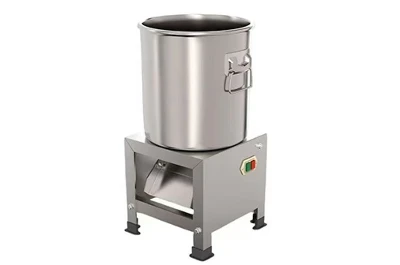
So, what’s the sweet spot? It all depends on three factors: the type of feed material, the desired particle size, and the grinder’s design. Let’s break each down. First, material type: hard, dense materials like corn or soybeans need higher speed (around 2,800–3,200 RPM) to break them down. Soft, fibrous materials like hay or straw can handle lower speed (2,200–2,600 RPM) because they’re easier to shred. That’s why multifunctional farm processors are so popular—they let you adjust speed settings to match the material, so you don’t have to switch machines for different feed crops. If you’re working with both grain and hay, a multifunctional model like the one at [Multifunctional Farm Processor] is designed to let you tweak RPM for each, saving you time and equipment costs.
Second, desired particle size. If you want coarse grind for beef cattle (which need more fiber), a lower end of the recommended range works. For poultry or small livestock like rabbits, you need a finer grind, so you’ll lean toward higher speed. But here’s a key point: speed isn’t the only way to adjust particle size. The screen size (the holes in the perforated plate) matters too. A smaller screen hole paired with moderate speed can give you a fine grind without overworking the machine. Conversely, a larger screen with slightly higher speed might give you the same result as a smaller screen with lower speed—without wasting energy. It’s a balance, and that’s why choosing the right grinder for your operation is crucial. For small-scale farmers or hobbyists, a household farm processor might be perfect, as it has pre-set speed settings for common feed types, taking the guesswork out of the equation.
Third, the grinder’s design. Not all grinders are built the same. Commercial farm feed grinders have stronger motors and balanced grinding discs that can handle consistent RPM, while smaller hobby models might have thinner discs that can’t run at high speeds without vibrating. That’s why it’s important to follow the manufacturer’s guidelines for your specific machine. If you’re unsure, don’t hesitate to reach out to a supplier—we’ve helped hundreds of farmers match their grinder’s speed to their needs, whether they’re running a 10-head goat farm or a 200-cow dairy operation.
Let’s talk about another angle: wear and tear on the machine. When speed is too low, the hammers aren’t striking the feed enough, so the feed might stay in the grinding chamber longer than necessary. That leads to overprocessing of some pieces, even if the final result is uneven. When speed is too high, the hammers are striking constantly, leading to faster wear on the hammer tips. I tell farmers to check their hammers every few months—if the tips are worn down, it’s a sign the grinder’s speed might be too high, or the material is too hard for the current setup. Replacing hammers is cheaper than a new motor, but it’s still a cost you can avoid with proper speed adjustment.
Now, let’s connect this to real-world use cases. Last spring, a vegetable farm in Indiana reached out to me because they were struggling with their green feed processor. They were running it at 3,000 RPM to process fresh alfalfa for their sheep, but the result was too fine—alfalfa dust was getting blown out of the machine, wasting product and creating a mess. We adjusted the speed to 2,500 RPM, and suddenly, the grind was uniform, the dust was gone, and they were able to feed all the alfalfa they processed. The green feed processor at [Green Feed Processor] is specifically designed for fresh, fibrous materials, with speed settings tailored to avoid excess dust, which is exactly what that farm needed.
Another example: a pig farm in Iowa that was using an animal feed processor for their corn and soybean mix. They were running the grinder at 3,400 RPM, resulting in a fine grind that was leading to feed spoilage in their troughs. When we dropped the speed to 2,900 RPM and used a 3/16-inch screen instead of 1/8-inch, the grind became uniform cornmeal, which the pigs ate without wasting, and spoilage dropped by 25%. That’s a direct result of matching speed to the material and desired particle size.
So, what’s the takeaway here? The speed of a farm feed grinder isn’t just a number on a dial—it’s a critical factor that impacts feed quality, livestock health, energy costs, and equipment longevity. Too slow, and you get uneven grind, wasted feed, and lower animal performance. Too fast, and you get over-pulverized feed, higher energy bills, and faster machine wear. The sweet spot depends on what you’re grinding, what you’re feeding it to, and your grinder’s design.
If you’re not sure what speed is right for your operation, don’t guess. Reach out to a trusted supplier who can help you choose the right equipment, from a basic farm feed grinder for small operations to a heavy-duty animal feed processor for large farms. Our team works directly with farmers to assess their needs, recommend the best machine, and share tips on adjusting speed for optimal results. Whether you’re a hobbyist looking for a household farm processor or a commercial farmer needing a robust grinder, we have the solutions to fit your operation.


Ready to get your feed processing running smoothly? Don’t let incorrect speed settings waste your time, money, or feed. Connect with our team today to discuss your farm’s needs and find the right equipment for you. We’re here to help you make the most of your feed and your operation.
References
- National Agricultural Statistics Service. (2022). Feed Management Practices for Livestock Operations. U.S. Department of Agriculture.
- Jones, B. L. (2021). “Optimizing Hammer Mill Speed for Feed Particle Size and Energy Efficiency.” Journal of Agricultural Engineering Research, 145, 112–119.
- Miller, A. K. (2020). Livestock Digestive Health: The Impact of Feed Particle Size. Extension Bulletin, University of Illinois.
- Smith, D. E. (2019). “Equipment Maintenance for Farm Feed Grinders.” Farm Machinery Journal, 42(3), 28–32.


