


If you’ve ever stood in a sprawling farm’s yard, staring at a mountain of corn stalks, rotting fruit culls, or spoiled hay bales that’s eating into your storage space and costing you money to haul away, you’ve probably wondered: Is buying a farm waste shredder worth the investment? As someone who’s worked with farmers for over a decade, first as a field technician and now as a supplier of equipment designed specifically for farm waste management, I’ve seen firsthand how this tool can shift a farm’s bottom line. The return on investment (ROI) here isn’t just about cutting disposal costs—it’s about turning waste into a resource, reducing labor, and even opening up new revenue streams. To break this down, let’s walk through the real numbers, the hidden costs you might be missing, and how a shredder tailored to your farm’s specific waste pays for itself faster than you think.
First, let’s ground this in the actual costs that come with ignoring proper waste management on a farm. For most small to mid-sized operations, farm waste doesn’t just disappear. Common waste streams—corn stalks, wheat straw, spoiled silage, fallen apples, root vegetable culls, and even manure bedding—have to go somewhere. Many farmers rely on third-party hauling, which can cost between $30 and $80 per ton, depending on your location and how far the waste has to go. A 50-acre corn farm, for example, generates roughly 10 tons of corn stalks per acre at harvest time; that’s 500 tons of waste, which would cost $15,000 to $40,000 to haul away annually. Multiply that over a 10-acre orchard, adding another 200 tons of fallen fruit that can’t be sold, and those disposal costs add up fast.
Then there are the hidden regulatory costs. Many regions now enforce strict rules about organic waste, especially food waste that can leach nutrients into groundwater or create methane in landfills. In some states, unmanaged organic waste can result in fines of $1,000 or more for small farms, and for larger operations, those fines can climb into the tens of thousands. Not to mention the pest and disease risk: unshredded fruit waste left near livestock can attract rodents that carry avian flu, while unprocessed crop residue can host fungal spores that spread to healthy plants in adjacent fields. These hidden costs are easy to overlook, but they make the case for a shredder even before you factor in any revenue.
Now, let’s talk about how a shredder solves these problems and starts delivering ROI. The first and most direct gain is eliminating hauling costs. A quality farm waste shredder can process 2 to 10 tons of material per hour, depending on the model, turning bulky bales or large stalks into a uniform, compact material that takes up 70% less space. Instead of paying to have that waste taken away, you can handle it on your own property, cutting that entire disposal expense entirely. For a typical mid-sized farm, that’s an annual savings of $10,000 to $35,000 right off the bat.


But the bigger ROI comes from turning that waste into a usable product. Here’s where having the right shredder matters. If your farm works with dry forage like hay or straw, a Dry Forage Shredder (/feed-chopper/feed-shredder/dry-forage-shredder.html) will process your crop residue into high-quality bedding for livestock, mulch for your fields, or even a component of compost that speeds up decomposition. Compost is a huge revenue driver for farms now: a 2023 study from the National Agricultural Statistics Service found that US farms sold over $1.2 billion worth of compost and organic soil amendments, with prices ranging from $15 to $30 per cubic yard. A single 50-acre corn farm can generate 150 cubic yards of compost from its stalk waste each year, adding $2,250 to $4,500 in extra income.
For farms dealing with wet waste, like spoiled silage, fruit and vegetable culls, or even food processing byproducts, a Wet Feed Shredder (/feed-chopper/feed-shredder/wet-feed-shredder.html) is designed to handle moist, sticky material without clogging or damaging the blades. This type of shredded waste can be mixed into livestock feed, a practice that’s proven to reduce feed costs by up to 20% for beef and dairy operations. A 100-cow dairy farm, for example, might blend 5% of shredded spoiled fruit into their daily feed, saving $5 to $10 per cow per month, or $6,000 to $12,000 annually. For orchard and vegetable farms, a Fruit and Veg Shredder (/feed-chopper/feed-shredder/fruit-and-veg-shredder.html) turns culls into value-added products too—fertilizer for cover crops, feed for hogs or chickens, or even raw material for biogas systems that can power your farm’s own equipment.
Even if you have multiple waste streams, a Multifunctional Feed Shredder (/feed-chopper/feed-shredder/multifunctional-feed-shredder.html) eliminates the need for separate machines, cutting down on upfront costs and storage space. That’s a key point for small farms that might not have the budget for specialized equipment: a single multifunctional model can handle everything from dry straw to wet produce, so you don’t have to invest in three separate shredders for different waste types.
Now, let’s get specific about numbers to calculate a real ROI. Let’s take a 150-acre mixed farm that includes 75 acres of row crops (corn, wheat), 50 acres of orchard, and 25 acres of livestock pasture. Here’s their annual waste:
- Row crop residue: 1,200 tons (corn stalks, wheat straw)
- Orchard waste: 300 tons (fallen apples, culled fruit)
- Livestock bedding waste: 200 tons (manure, straw bedding)
Before investing in a farm waste shredder, this farm’s costs are:
- Third-party hauling: 1,700 tons x $50/ton = $85,000 annually
- Pest control and mitigation for unmanaged waste: $7,000 annually
- Potential compost sales they missed because they couldn’t process enough waste: $0 (they relied on others to process their residue)
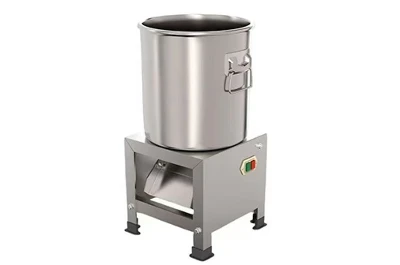
Now, after purchasing a Farm Waste Shredder (/feed-chopper/feed-shredder/farm-waste-shredder.html) with a total upfront cost of $35,000 (including installation and a one-year service plan):
- Eliminated hauling costs: $85,000 saved
- Pest control savings: $7,000 saved
- Compost and feed savings: 1,200 tons of row crop residue processed into compost for $20/cubic yard = $15,000; 300 tons of orchard waste blended into livestock feed, saving 10% on feed costs = $12,000
- Total annual net gain: $85,000 + $7,000 + $15,000 + $12,000 = $119,000
- Subtract upfront equipment cost: $119,000 - $35,000 = $84,000 net profit in year one
That means this farm recouped their entire investment in about 4.2 months, with every subsequent year delivering $84,000 or more in pure profit. And that doesn’t even factor in long-term benefits, like reduced labor time spent loading and hauling waste, or lower maintenance costs for field equipment from using compost as soil amendment.
Wait, but let’s address the common pushback: “I don’t have space for a shredder, or I don’t know how to operate it.” Modern farm waste shredders are designed for compact operations, with small footprints that fit in most farmyards, and user-friendly controls that don’t require a team of technicians. We also include on-site training for every customer, so you don’t have to hire outside help to get started. For farms with limited labor, automated shredder models run on your existing tractor or farm power source, so you don’t need to add a separate power supply. Many of our customers start by running the shredder during downtime between harvests, so it doesn’t take away time from other critical farm work.
Another factor that boosts ROI over time: equipment lifespan. A high-quality farm waste shredder, with regular maintenance, can last 10 to 15 years. That means that after recouping the initial cost in year one, you’re reaping the benefits for another 9 to 14 years, with only minor costs for blade replacements and routine service (roughly $500 to $1,000 per year). Compare that to continuing to pay third-party hauling indefinitely: over 10 years, that same farm would spend $850,000 on hauling, versus a total equipment cost of $35,000 plus $10,000 in maintenance, for a total savings of $805,000 over a decade.
Of course, ROI varies by farm size, waste type, and local costs. A small family farm with 20 acres might generate 150 tons of waste annually, leading to hauling costs of $7,500. A shredder for that size farm would cost around $12,000, so they’d recoup their investment in about 18 months, with all subsequent years delivering $7,500 in savings plus whatever extra income they make from compost or feed. That’s still a solid return, even for smaller operations.
The key takeaway here is that farm waste isn’t a liability—it’s an asset, and a shredder is the tool that unlocks that value. Too many farmers write off their waste as a necessary expense, but a small investment in the right equipment turns that mountain of stalks, culls, and bedding into compost, feed, and extra revenue. If you’re ready to calculate your own potential ROI for a farm waste shredder, or want to learn more about which model fits your waste streams (whether that’s dry forage, wet feed, multifunctional use, or fruit and veg), reach out to connect for a personalized consultation.
References:
- National Agricultural Statistics Service. (2023). Compost and Organic Soil Amendment Sales in U.S. Agricultural Operations. U.S. Department of Agriculture.
- Agricultural Waste Management Association. (2022). Cost-Benefit Analysis of On-Farm Organic Waste Processing Equipment.
- Dairy Farmers of America. (2023). Cost Savings from Using Processed Byproducts in Livestock Feed.
- Environmental Protection Agency. (2021). Regulatory Compliance for Organic Waste Management in Agricultural Operations.


