


With the upgrading of global building environments and increasing industrial ventilation demands, exhaust fans have evolved from simple functional devices into system-oriented products that integrate performance, aesthetics, and intelligent control. For international buyers, understanding the design philosophy of exhaust fans helps better evaluate product positioning and long-term market value.
The core design philosophy is centered on high-efficiency airflow circulation. The goal is not only to exhaust indoor air but also to achieve rapid air exchange between indoor and outdoor environments. Therefore, airflow channel optimization, blade angle design, and motor matching are key factors that allow higher ventilation efficiency with lower energy consumption.
Energy-saving and environmental protection principles are another major direction in modern exhaust fan design. By combining high-efficiency motors with aerodynamic optimization, products are designed to maintain strong airflow while minimizing energy consumption. This design approach aligns with global green building standards and meets increasing demand for low-carbon solutions in international markets.
Low-noise user experience is also a critical design consideration. Modern users value comfort in addition to performance, especially in residential, office, and hotel environments. Through dynamic balancing, vibration reduction structures, and low-noise blade design, operational noise is significantly reduced, making the products suitable for quiet environments.
Modular and maintainability design has also become increasingly important. By standardizing components such as motors, blades, and protective structures into modular units, production and installation become easier while maintenance costs are significantly reduced, improving overall service life and repair efficiency.
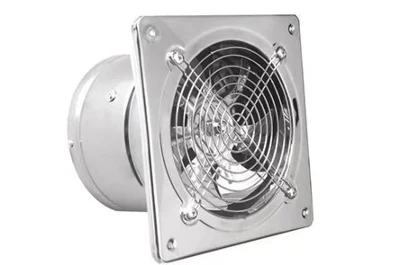
Safety-oriented design is embedded throughout the product structure, including protective grille systems, electrical insulation, and overheating protection mechanisms. These features ensure stable and reliable operation, particularly in industrial and commercial high-load environments.
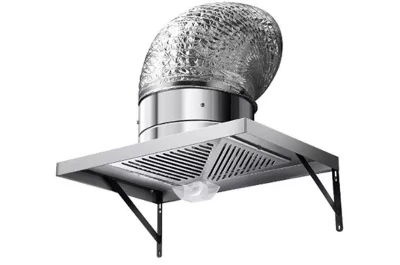
Human-centric and easy-installation design is another important direction. Since different applications require different installation methods, exhaust fans are designed in wall-mounted, window-type, ducted, or roof-mounted structures to meet diverse engineering needs while reducing installation complexity.
With the advancement of smart technology, intelligent design has become a key industry trend. By integrating sensors and control systems, exhaust fans can automatically adjust operation based on temperature, humidity, or air quality, enabling more precise air management.
In the future, exhaust fan design will continue to evolve toward higher efficiency, smarter control systems, and greater system integration, while placing stronger emphasis on user experience and environmental sustainability to meet the growing global demand for advanced ventilation solutions.


