

As global demand for efficient and energy-saving ventilation equipment continues to grow, manufacturing processes have become a critical factor influencing product quality and competitiveness. For international buyers, understanding how exhaust fans are produced helps better evaluate supplier capabilities and product reliability.
The production process typically begins with raw material selection. Housing materials are commonly made from galvanized steel, stainless steel, or high-strength engineering plastics to ensure corrosion resistance and structural stability. Fan blades are produced using aluminum alloy, metal sheets, or high-performance plastics depending on the application, balancing airflow efficiency and durability.
During the stamping and forming stage, metal housings are shaped using precision stamping machines to ensure dimensional accuracy and structural strength. High-precision molds help reduce manufacturing deviations and ensure consistency across production batches.
Motor manufacturing is the core stage of exhaust fan production. High-quality products usually use pure copper winding motors, which undergo multiple processes including coil winding, varnishing, drying, and dynamic balance testing. Motor quality directly determines the lifespan, efficiency, and energy consumption of the exhaust fan.
Fan blade processing and dynamic balancing are equally important. After forming, blades must be precisely calibrated to ensure stable rotation and avoid vibration or noise issues. High-standard manufacturing processes significantly improve operational stability and noise performance.
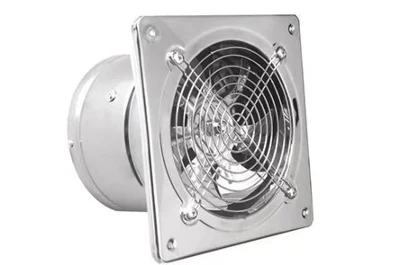
The assembly stage integrates the motor, blades, housing, and protective components into a complete unit. Standardized assembly lines are typically used to ensure structural consistency and safety. Screwing, wiring, and protective grille installation are strictly controlled during this process.
Quality inspection is an essential part of the manufacturing workflow. Before leaving the factory, exhaust fans must pass airflow testing, noise measurement, motor temperature rise testing, and safety inspections to ensure compliance with international standards and market requirements.
Surface treatment processes also play an important role in durability. Coating, anti-corrosion treatment, or electrophoretic painting enhances the resistance of the housing to harsh environments such as high humidity and high temperatures.
With the advancement of smart manufacturing, more factories are adopting automated production lines and intelligent testing systems, improving efficiency while reducing human error and ensuring more consistent product quality.
In the future, as global demand for high-performance and energy-efficient ventilation equipment continues to rise, standardized, automated, and intelligent manufacturing processes will become key development trends in the exhaust fan industry.


