


Quick Answer: A feed chopper (also called a forage chopper, chaff cutter, or feed shredder) is a machine that cuts hay, corn stalks, straw, silage, and green fodder into uniform pieces for livestock feed. For small farms, choosing the right feed cutting machine means matching four key specifications to your operation: motor power (minimum 1.5 kW or 1.5–2 HP), throughput capacity (800–1,200 kg/h for small-scale use), blade material (stainless steel for durability and food safety), and material compatibility (dry, wet, or mixed forage types). A well-matched compact feed chopper reduces daily feed preparation from over an hour of hand-cutting to under ten minutes, improves feed digestibility through consistent particle sizes of 5–15 mm, and pays for itself in labor savings within a single season for most small livestock operations.
Why Small Farms Need a Reliable Feed Chopper
For small farms and family workshops, feeding livestock well without burning through hours of manual labor is one of the most persistent daily challenges. Cutting hay, corn stalks, straw, or green fodder by hand is slow, inconsistent, and physically demanding, especially for households managing goats, rabbits, poultry, pigs, or a handful of dairy cattle. This is exactly the gap a well-built feed chopper fills. A compact feed chopper turns a job that once took an hour of hand-cutting into a task that can be finished in a few minutes, freeing up time for other farm work and reducing the physical toll on farmers and workers alike.
Across small farms in Argentina, Chile, and neighboring regions, the demand for affordable, small-scale forage processing equipment has grown steadily. Large industrial choppers are built for commercial feedlots and are simply oversized, overpriced, and overcomplicated for a family operation feeding a modest herd. What small farms actually need is equipment sized to their reality: a feed chopper that is powerful enough to process real volumes of forage, but compact enough to fit in a barn corner, simple enough to run without a technician, and priced in a way that makes sense for a small or medium operation.
What Is a Feed Chopper and How Does a Feed Cutting Machine Work?
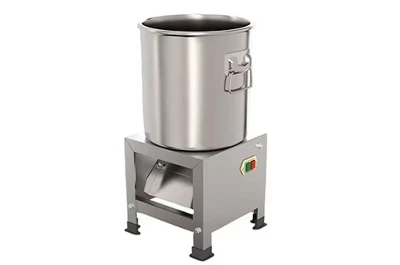
A feed chopper, sometimes called a feed cutting machine or chaff cutter, is a mechanical device that cuts raw plant material such as hay, straw, corn stalks, sugarcane leaves, banana stems, or green forage into short, uniform pieces. Most small-scale models work using a rotating blade or drum system: the operator feeds raw material into a hopper, rotating knives cut it into consistent lengths, and the chopped output is discharged through a chute for collection or direct feeding.
The value of this process goes beyond convenience. Uniformly chopped feed is easier for livestock to chew and digest, which improves nutrient absorption and reduces selective eating, where animals pick out the tastiest parts of a feed pile and leave the rest behind. That selective eating wastes feed and creates uneven nutrition across a herd. A feed cutting machine solves this by making every mouthful roughly the same size and texture, so animals eat a more balanced diet and farmers get more value out of every kilogram of forage they grow or buy.
Small electric or diesel-powered feed choppers are typically rated by throughput, commonly expressed in kilograms per hour, and by the range of materials they can safely process. For a small farm, a machine that reliably handles dry hay, green stalks, and light woody material covers the vast majority of daily needs without requiring multiple separate machines.
Forage Chopper, Feed Shredder, or Farm Food Processor: Which One Do You Need?
Buyers often see several similar terms used interchangeably online, and it helps to understand what each one really emphasizes:
Forage Chopper: Built specifically to cut green forage crops and fresh-cut grasses into short lengths suitable for silage or immediate feeding. This is the go-to choice for farms that grow their own green feed and need it processed quickly after harvest, before it loses freshness.
Feed Shredder: Focuses on breaking down tougher, drier, or more fibrous material, such as corn stalks, dried straw, or coarse crop residue, into smaller, more digestible fragments. A feed shredder is especially useful for farms that rely heavily on crop leftovers as a feed source.
Farm Food Processor: A broader, multi-purpose machine, often capable of handling not just forage but also root vegetables, kitchen scraps, or mixed feed ingredients. This versatility makes it a good fit for smaller households and workshops that want one machine to cover several jobs instead of buying separate equipment for each task.
In practice, many small-farm buyers do not need to choose only one category. A well-designed compact chopper can flex across green forage, dry stalks, and light food-processing tasks, which is exactly why demand has grown for multi-functional, small-capacity machines rather than single-purpose industrial units.
The Real Benefits for Small Farms and Workshops
Investing in a compact feed chopper delivers measurable, everyday benefits that go well beyond simply saving time:
Less manual labor. Hand-chopping feed with a machete or hand knife is repetitive, tiring, and a source of injury risk. A machine removes that burden and lets farm labor be redirected to higher-value work.
Better feed conversion. Smaller, uniform pieces are easier to chew and digest, which typically improves weight gain and milk yield relative to feeding whole or unevenly cut forage.
Reduced feed waste. Uniform chopping curbs selective eating, so less feed ends up trampled or discarded, stretching the value of every harvest or purchased bale.
More efficient storage. Chopped forage packs more densely for silage or storage than long, uncut material, making better use of limited barn or shed space.
Lower cost of entry. Compact, small-farm-sized machines avoid the price tag, power requirements, and footprint of industrial equipment, making mechanization realistic for family-scale operations.
How to Choose the Right Feed Chopper for Your Operation
Selecting the right feed cutting machine comes down to matching the equipment to your actual farm conditions rather than buying the largest or cheapest option available. A few practical questions help narrow the choice:
What materials will you process most often? If your feed source is mostly fresh-cut grass or green stalks, prioritize a forage chopper. If you rely more on dried crop residue, a feed shredder built for tougher material is the better fit.
How much feed do you need to process daily? Match the machine's throughput to your herd size. Oversizing wastes money and space; undersizing means the machine becomes a daily bottleneck.
What power source is available? Electric models suit farms with reliable power access, while diesel or dual-power options offer flexibility for more remote sites.
How easy is it to maintain? Look for accessible blades, simple cleaning, and durable components, since a machine that is hard to service will sit idle exactly when you need it most.
Common Uses Across Different Types of Small Farms
The value of a compact feed chopper looks a little different depending on what a farm actually raises, but the underlying benefit, turning raw forage into feed livestock can use efficiently, stays the same across operation types.
Dairy and beef cattle farms. Chopped silage and hay improve intake and digestion, which supports more consistent milk yield and steadier weight gain, while reducing the amount of forage trampled and wasted in the feed trough.
Goat and sheep operations. Smaller ruminants benefit from shorter, more manageable feed lengths, and a compact forage chopper sized for a modest flock avoids the overkill of industrial equipment built for cattle feedlots.
Poultry and rabbit farms. A farm food processor style machine can shred greens and vegetable scraps into fine, easy-to-eat pieces, supporting mixed-feed diets that stretch purchased feed budgets further.
Mixed family farms and rural households. Where a household keeps a small mix of animals, a single multi-purpose feed shredder or farm food processor often replaces several hand tools at once, simplifying daily chores.
Frequently Asked Questions
Is a small feed chopper powerful enough for daily farm use?
Yes. Compact models are engineered specifically for regular daily use on small farms, not as scaled-down toys. With the right throughput rating matched to herd size, a small feed chopper can comfortably handle a farm's daily forage needs while using far less power and space than industrial machinery.
Can one machine handle both green forage and dry crop residue?
Many mid-range models are built to handle both, though performance and blade wear vary by material. Farms working with a wide mix of feed types often prefer a versatile forage chopper or feed shredder rated for multiple materials rather than owning several single-purpose machines.
How difficult is it to maintain a feed cutting machine?
Basic upkeep is straightforward: clearing debris after use, keeping blades sharp, and periodic lubrication of moving parts. Choppers designed with accessible blade housings and simple mechanical layouts make this routine maintenance manageable without specialized tools or technical training.
Why Distributors and Farm Owners in Argentina and Chile Choose Zenterest
Zenterest specializes in compact feed choppers, feed cutting machines, forage choppers, feed shredders, and farm food processors built specifically for small farms and family workshops. Rather than manufacturing out of a single facility, Zenterest works with a network of more than a dozen specialized factories across China, built up over nearly a decade of export experience serving markets across South America.
This factory-network model is what sets Zenterest apart from both individual manufacturers and typical trading companies. By consolidating orders across multiple factories, Zenterest secures volume discounts and priority production slots that a single buyer, and even a buyer contacting a factory directly, cannot access on their own. The result is factory-direct pricing that is genuinely lower than going straight to a single factory, combined with the flexibility to source the right machine type, whether that is a forage chopper for green feed, a feed shredder for dry crop residue, or a multi-purpose farm food processor, from whichever factory in the network builds it best.
For distributors and wholesalers serving Argentina, Chile, and the wider South American small-farm segment, this translates directly into stronger margins and more competitive landed costs. It also means a more reliable supply chain: if one factory faces a delay or capacity constraint, the broader network provides backup production capacity, helping orders stay on schedule.
A Growing Market for Small-Scale Mechanization
Across Argentina, Chile, and the broader South American countryside, small and mid-sized livestock operations make up a large share of rural livelihoods, yet many of these farms have historically been priced out of mechanized feed processing. As labor costs rise and rural households look for practical ways to improve productivity without taking on large debt, compact, affordable feed choppers are filling that gap. This shift creates real opportunity for distributors who can offer equipment that is both genuinely useful and genuinely affordable, rather than scaled-down versions of industrial machinery sold at industrial prices. Zenterest's factory-network approach is built to serve exactly this segment, supplying wholesale volumes of small-capacity feed choppers, feed shredders, and forage choppers at price points that make sense for family farms rather than commercial feedlots.
Built for Real Farms, Not Just Factories
Every product in the Zenterest feed chopper collection is designed around the realities of small-scale farming: compact enough for tight spaces, simple enough for a single operator to run and maintain without specialized training, and durable enough to handle daily use season after season. Whether the end customer needs a small forage chopper for a backyard herd, a rugged feed shredder for crop residue, or a versatile farm food processor for mixed tasks, the goal is the same: less manual labor, better-fed livestock, and equipment that actually fits a small farm's budget.
For wholesalers and distributors looking to bring dependable, affordable feed cutting machines to small farms across South America, Zenterest offers both the product range and the factory-backed pricing structure to make that possible at scale.


