

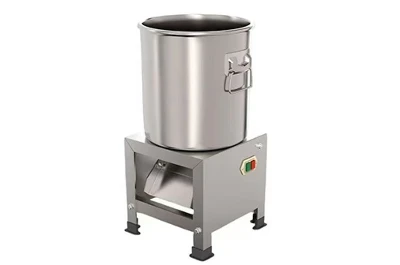

For an agricultural equipment distributor in Argentina or Chile, compact feed choppers are an attractive product line. Demand is broad, the price point is accessible to small farmers, the machines are simple enough that after-sales support stays manageable, and margins are healthy when sourcing is done well. The difficulty is not finding a supplier - it is choosing the right kind of supplier and understanding the real cost of getting a container to your warehouse.
This guide is written for distributors, wholesalers and agricultural cooperatives that want to import compact feed choppers from China professionally. It covers the difference between factories, trading companies and multi-factory suppliers, how to read a quotation, how to structure a first order without tying up too much cash, what to inspect before paying, what documentation Argentine and Chilean importers need, realistic shipping times, and the mistakes that turn a promising product line into dead stock.
It is deliberately practical. There are no generic assertions about Chinese manufacturing quality here, only the specific checks that separate a reliable supply partner from an expensive lesson.
|
>> Request a Wholesale Price List with FOB and CIF Options for Argentina and Chile << |
Why China Supplies Most of the World's Compact Feed Choppers
The compact agricultural machinery sector in China has matured over two decades. Components - motors, bearings, blades, belts, castings - are produced at scale within a few hundred kilometers of the assembly plants, which keeps unit costs low and makes spare parts easy to source. For a distributor, this matters more than the headline price: a machine is only as good as the availability of its wear parts five years later.
The practical consequence is that almost every compact chopper sold in South America, regardless of the brand on the label, originates in China. The differentiator is therefore not the country of origin but the supplier: whether they control quality, hold spare parts, understand export documentation and support you after the container has sailed.
Factory, Trading Company or Multi-Factory Supplier?
Distributors usually assume that buying direct from a factory is best. In practice, each of the three supplier types has a distinct profile, and the right choice depends on your order size and product range.
A single factory. Advantages: direct communication with production, potentially the lowest price at very large volumes for that factory's own models. Limitations: you can only buy what that factory makes, so a full product line requires several factories and several sets of paperwork; small orders get low priority; and if the factory has a quality problem, you have no alternative source.
A trading company. Advantages: broad product range, one contract, one shipment, English and often Spanish communication. Limitations: no control over production, limited technical depth, and a margin layer on top of the factory price. Quality problems are harder to resolve because the trader is not the manufacturer.
A multi-factory supplier. This is the model Zenterest operates. We maintain long-term relationships with more than a dozen specialized partner factories and consolidate orders across them. Advantages: a full product range under one contract, pricing based on aggregated volume rather than a single factory's tier, priority production slots, and coordinated quality inspection. Limitations: less visibility into any single production line, which is why inspection discipline matters.
For a distributor building a range - choppers, cutters, grinders, shredders - the multi-factory model usually provides the best balance of range, price and administrative simplicity. For a distributor buying one model in very large volume, a direct factory relationship may be worth exploring alongside it.
Understanding the Real Landed Price: FOB, CIF and DDP
The quotation a supplier sends is rarely the full cost of getting goods into your warehouse. Understanding the three common terms prevents the unpleasant surprise of a landed cost that erases your margin.
FOB (Free On Board). The supplier delivers to the named Chinese port and handles export clearance. You pay ocean freight, insurance and destination charges separately. This gives you the most control and usually the lowest total cost if you have a reliable freight forwarder.
CIF (Cost, Insurance and Freight). The supplier arranges and pays ocean freight and insurance to your destination port. Simpler for a first order, but the freight is embedded in the price and you cannot easily compare suppliers unless they quote on the same basis.
DDP (Delivered Duty Paid). The supplier handles everything to your door, including duties and taxes. Convenient, but you lose visibility of the cost components and you are relying on the supplier's customs handling, which is often subcontracted. Use only with a supplier who has demonstrable experience in your country.
Whichever term you use, always calculate the landed cost yourself: goods value, freight, insurance, port charges, customs brokerage, duties and taxes, inland transport, and the cost of capital tied up during transit. Compare suppliers on landed cost per unit at the same term, not on the quoted price. Two quotations that differ by ten percent can reverse order once freight and duties are included.
|
>> Get a Landed-Cost Comparison Sheet for Your Market - Request a Quote << |
MOQ, Mixed Containers and Cash Flow
Cash flow kills more distribution businesses than bad products. A first order that fills a container with a single slow-moving model is a first order you may regret for a year. Structure early orders to spread risk.
Start with a mixed-model container. A well-chosen mix of three to five models - an entry-level household unit, a mid-range forage chopper, a poultry cutter and a root crop cutter, for example - lets you test which products your market actually wants without committing to a single bet. Mixed containers also improve container utilization, which lowers freight cost per unit.
Negotiate the minimum order quantity explicitly and in writing. MOQs vary by model and by configuration; custom colors or private labels usually carry a higher minimum than standard models. If a supplier quotes an MOQ that is too high for your first order, ask whether a trial order at a higher unit price is possible. A supplier confident in their product will usually accommodate a serious buyer.
Reserve part of your budget for spare parts. A first order without blades and belts is a first order that will generate a customer complaint within months. Include a spare parts allowance of roughly three to five percent of goods value, with at least one spare blade per model sold.
Quality Control: What to Verify Before You Pay
Quality is not a feeling about a sample; it is a set of verifiable facts. Before releasing final payment, confirm the following for every model in the order.
Blade material and hardness. Ask for the steel grade and confirm that blades are manganese alloy or equivalent rather than plain carbon steel. A hardness specification, even a simple one, is a sign the supplier understands the question.
Motor winding. Confirm copper windings, not aluminium. Copper runs cooler and lasts longer under sustained load, which is precisely the failure mode in small-farm use.
Voltage and frequency. Confirm the motor is configured for 220V/50Hz single-phase, matching the supply in Argentina and Chile. A 60Hz motor sent by mistake will run fast and overheat.
Cut-length adjustment range. Ask for the minimum and maximum in millimeters and verify against the sample. A machine that cannot reach two centimeters is unsuitable for dairy goats regardless of build quality.
Full-load test. Require a test report or video of each model running under load with actual material, not an empty-chamber demonstration.
Pre-shipment inspection. Arrange third-party inspection, or at minimum a documented inspection with photographs of each model, serial numbers and packaging before the container is sealed. Budget for this; it is cheap relative to a rejected container.
Documentation and Compliance for Argentina and Chile
Import documentation is where inexperienced buyers lose the most time. Requirements vary by product classification and change periodically, so confirm current rules with your customs broker before ordering rather than relying on a supplier's assurance. As a general checklist, expect to need a commercial invoice, packing list, bill of lading, certificate of origin, and product documentation sufficient for your customs classification. Electrical products may require conformity documentation depending on how they are classified and marketed.
Ask your supplier two questions early. First, can they provide a certificate of origin, and second, what product documentation do they hold for the models you are ordering? A supplier who answers both quickly and specifically is likely to be a reliable partner; one who deflects is telling you something important.
Shipping Routes and Realistic Lead Times
|
Stage |
Typical duration |
Notes |
|
Order confirmation and deposit |
1 week |
Confirm specifications, packaging and inspection plan |
|
Production (standard models) |
15 - 30 days |
Custom colors or private label may extend this |
|
Production (customized) |
30 - 45 days |
Allow extra time for new tooling or manuals |
|
Inspection and container loading |
2 - 5 days |
Do not skip pre-shipment inspection |
|
Ocean freight to Buenos Aires |
30 - 40 days |
Varies with routing and carrier |
|
Ocean freight to San Antonio or Valparaiso |
25 - 35 days |
Transit time excludes port congestion |
|
Destination clearance and delivery |
5 - 15 days |
Depends on broker and documentation quality |
Plan your first order with a two-month buffer between payment and shelf availability. Distributors who assume a six-week total cycle are almost always disappointed, and the resulting stock-out damages the customer relationships the order was meant to build.
Payment Terms and Risk Management
The standard structure is a deposit on order confirmation and the balance before shipment or against a copy of the bill of lading. This is normal in the sector and not a red flag in itself. What matters is that each stage is tied to a verifiable milestone.
Structure payments so that the final instalment is released only after inspection results are shared. Keep the inspection report, photographs and test video on file. If you can, visit the factory or send a representative for a first significant order - it is the single most effective risk-reduction measure available, and most serious suppliers welcome it.
For repeat orders, negotiate better terms over time. A supplier who has shipped successfully three times has earned a more flexible arrangement, and a distributor with a proven payment record has earned a better price tier. Both sides benefit from a relationship that matures.
Private Label and OEM: Building Your Own Brand
The most durable margin in distribution comes from owning the brand, not from arbitraging price. Compact feed choppers are well suited to private label because the machines are simple, the customization points are limited and the perceived value to the end customer is driven by presentation and support as much as by specification.
Typical private label scope includes the brand plate on the machine, custom paint color, branded cartons and manuals in Spanish, and a sticker set for retail display. Minimum quantities are higher than for standard models but usually manageable for a distributor with an established customer base. Start with one or two best-selling models rather than the whole range, prove the concept, then extend.
Seven Mistakes First-Time Importers Make
- Comparing quoted prices instead of landed costs. Freight and duties can reverse the ranking of two suppliers.
- Ordering a single model in container quantity. If it does not sell, capital is frozen for a season. Start mixed.
- Skipping inspection to save a few hundred dollars. A rejected container costs many times more.
- Forgetting spare parts. Blades and belts are consumables; a customer who cannot buy them becomes a former customer.
- Ignoring voltage and frequency. Confirm 220V/50Hz explicitly in the purchase order, not just in conversation.
- Assuming documentation is the supplier's problem. It is yours at the border; confirm requirements with your broker early.
- Choosing a supplier with no technical depth. If they cannot explain blade hardness or cut-length range, they cannot support you after the sale.
Why Zenterest Works as a Sourcing Partner
Zenterest is a Chinese manufacturer and export supplier of compact feed choppers, forage cutters, chaff cutters and feed processing machinery. Established in 2017 in Jiaxing, Zhejiang Province, the company employs a professional team of over one hundred staff and generates annual turnover exceeding one hundred million RMB, serving customers in more than twelve countries with a focus on Southeast Asia, the Middle East and South America.
Our model is built for distributors. We work with more than a dozen specialized partner factories, consolidating volume to secure preferential pricing, priority production slots and bulk discounts that individual buyers cannot obtain even when dealing directly with a factory. That aggregated purchasing power is what allows us to support competitive retail pricing in price-sensitive markets such as Argentina and Chile.
Operationally, we support the checks described in this guide: we confirm 220V/50Hz single-phase configuration and cut-length ranges in writing, provide pre-shipment inspection with photographs and test records, coordinate container loading to maximize utilization, prepare export documentation including certificates of origin, and ship regularly to Buenos Aires, San Antonio and Valparaiso. For distributors building a brand, our OEM service covers private labeling, custom colors, branded packaging and Spanish manuals. We also stock wear parts and dispatch them quickly, because a distributor's reputation depends on a farmer being able to replace a blade in days rather than months.
- Multi-factory range under one contract, with aggregated-volume pricing
- Written confirmation of voltage, frequency and cut-length specifications
- Pre-shipment inspection with photographic and test records
- Container optimization and mixed-model loading for first orders
- OEM, private label, custom colors and Spanish-language manuals
- Wear parts stock and fast dispatch to protect your customers' uptime
Frequently Asked Questions
What is a realistic minimum for a first order? It depends on model and configuration, but mixed-model orders are possible at volumes well below a full container. Contact us with the models you want to test and we will confirm the minimum and the most economical loading plan.
Can you ship to both Argentina and Chile? Yes. We ship regularly to Buenos Aires, San Antonio and Valparaiso, and can quote FOB, CIF or DDP depending on your preference and experience level.
Do you provide Spanish manuals and branding? Yes. Spanish manuals are standard for South American orders, and OEM branding includes private labels, custom colors and branded packaging.
How do I verify quality before shipment? We provide test records and photographs, and we welcome third-party inspection. We recommend arranging inspection for a first order and keeping the report on file.
What if a part fails in the field? We stock wear parts including blades, belts and bearings and dispatch quickly. Distributors are encouraged to hold a small local parts inventory, and we can advise on the right mix for your installed base.
Source Carefully Once, Sell Confidently for Years
A well-chosen supply partner is a competitive advantage that compounds. The distributor who can deliver a correctly specified machine, a spare blade within a week and a consistent brand experience builds a customer base that does not switch on price alone. The distributor who buys on the lowest quote spends the following year managing complaints.
Use this guide as a checklist for your next supplier conversation: confirm the supplier model, compare landed costs at the same term, structure a mixed first order, verify quality before payment, and secure spare parts from day one. If you would like a quotation structured that way, send us your target models, volumes and destination ports, and we will return a landed-cost comparison with inspection and documentation details included.
|
>> Request a Wholesale Quotation with Landed-Cost Breakdown - Response Within 24 Hours << |


