


As demand for industrial, commercial, and residential ventilation continues to increase worldwide, exhaust fans have become an essential part of modern air circulation systems. For international buyers, understanding the structural features of exhaust fans not only helps evaluate product quality but also supports the selection of more efficient, durable, and energy-saving ventilation solutions.
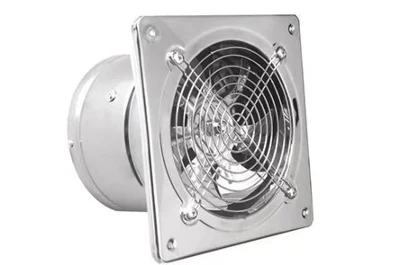
Exhaust fans are generally composed of several key components, including the motor, fan blades, housing, protective grille, and control system. Different structural designs directly affect airflow capacity, operating stability, noise levels, and service life. As a result, product structure has become an important consideration in the global purchasing market.
The motor is the core component of an exhaust fan and plays a major role in overall performance. High-quality exhaust fans are often equipped with pure copper motors, which provide stable operation, lower energy consumption, and better heat dissipation. Compared with standard motors, pure copper motors maintain higher efficiency during long-term operation and reduce the risk of mechanical failure, making them especially suitable for industrial and commercial applications.
Fan blade design also has a significant impact on airflow efficiency. Modern exhaust fans commonly use aerodynamic blade structures to improve airflow output while reducing operating noise. Some premium models feature metal blades or high-strength engineering plastics to enhance durability and corrosion resistance.
The housing structure mainly affects product stability and service life. Industrial exhaust fans are often manufactured using galvanized steel, stainless steel, or anti-corrosion coated materials to withstand high temperatures, humidity, and demanding industrial environments. In residential and commercial applications, lightweight construction and modern appearance are also becoming increasingly important.
Protective grille design is another essential structural feature that ensures operational safety. A well-designed protective system prevents foreign objects from entering the equipment while reducing the risk of accidental contact with rotating blades. Many international buyers pay close attention to whether products comply with relevant safety standards.
As demand for energy efficiency continues to rise, more exhaust fans are being developed with optimized airflow channel structures. These designs reduce air resistance, improve ventilation efficiency, and lower energy consumption. For industrial projects that require continuous operation, energy-efficient structures can significantly reduce long-term operating costs.
Intelligent control systems are also becoming an important feature of modern exhaust fan design. Some advanced models are equipped with temperature sensors, humidity detection, automatic speed adjustment, and remote control functions. These smart systems allow the equipment to automatically adjust performance according to environmental conditions, improving both convenience and air management efficiency.
In the future, as global demand for high-performance, low-energy, and intelligent ventilation equipment continues to grow, exhaust fan design will place even greater emphasis on aerodynamic optimization, energy-saving technology, and smart control systems. For manufacturers, continuously improving structural performance will remain a key factor in strengthening international market competitiveness.


