

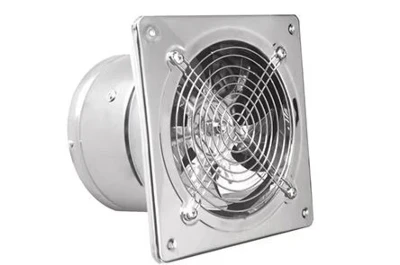
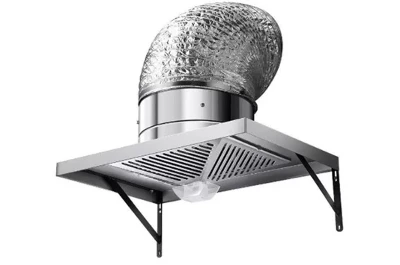

As exhaust fans are widely used in industrial, commercial, and residential environments, proper installation directly determines ventilation efficiency and service life. For international buyers and installation professionals, understanding standardized installation steps helps ensure stable system operation and optimal performance.
The first step is site inspection and installation position selection. The optimal location should be determined based on spatial structure, airflow direction, and areas where heat or moisture accumulates. For example, kitchen exhaust fans should be installed near cooking areas, bathroom units should be placed at ceiling level for moisture removal, and industrial fans should be positioned in zones with high heat or pollutant concentration.
The second step is determining installation dimensions and preparing openings. According to the product specifications, precise openings should be made in walls, windows, or ceilings to ensure the fan fits securely and to prevent air leakage or unstable installation due to size mismatch.
The third step is installing the mounting bracket or frame. For wall-mounted or ducted systems, a supporting structure must be fixed first to ensure operational stability and vibration resistance. The bracket should be leveled accurately to avoid noise or imbalance during operation.
The fourth step is installing the main unit. The exhaust fan should be securely placed into the prepared position or bracket, ensuring a tight connection with the wall or duct system to prevent air leakage. Adequate space for blade rotation should also be confirmed to avoid operational interference.
The fifth step is electrical wiring connection. Wiring must be carried out according to the product manual, ensuring that the power supply matches the rated specifications. In industrial installations, proper grounding is essential to enhance operational safety and prevent electrical faults.
The sixth step is duct or outlet connection where applicable. For ducted or centralized ventilation systems, the exhaust fan must be properly sealed with air ducts to ensure smooth airflow and minimize resistance loss.
The seventh step is system testing and performance verification. After installation, a trial run should be conducted to check airflow volume, noise level, and operational stability. Any abnormal vibration or airflow issues should be addressed to ensure proper functioning.
The final step is safety inspection and site cleanup. All screws should be tightened, wiring checked, and protective grilles properly installed before cleaning the installation site to ensure long-term stable operation.
With advancements in modern engineering standards, many exhaust fans now feature modular designs, making installation more efficient, reducing errors, and improving overall system stability.
In the future, with the development of smart ventilation systems, exhaust fan installation will become more standardized and intelligent, achieving deeper integration with building air management systems.


