

With the continuous growth of HVAC systems, building ventilation projects, and industrial air management demands, aluminum foil ducts play a critical role as flexible air distribution components in modern ventilation systems. For international buyers, understanding their core functions helps better evaluate their value in different applications.
Air transmission is the most fundamental and important function of aluminum foil ducts. They connect fans, air conditioning units, or exhaust systems to efficiently transport air between different spaces, ensuring smooth air circulation for both supply and exhaust purposes.
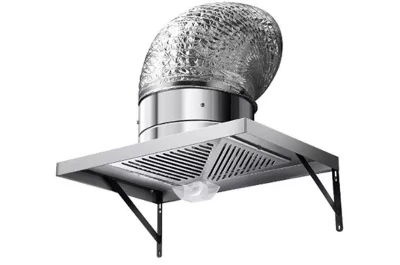
Exhaust and smoke removal functions are especially important in kitchen and industrial applications. In range hood systems or industrial exhaust setups, aluminum foil ducts quickly remove hot smoke, moisture, and polluted gases outdoors, improving air quality and ensuring a safer environment.
Ventilation and air exchange is another key function. In residential, commercial, and public buildings, aluminum foil ducts work with fresh air systems to continuously supply clean air while expelling stale air, significantly improving indoor air quality and comfort.
Connection and adaptability make aluminum foil ducts essential components in ventilation systems. Due to their flexibility, they can connect equipment and duct systems of different sizes, enabling easy installation in complex spaces while improving system compatibility.
Thermal insulation support is also available in certain specialized types of aluminum foil ducts. Insulated versions help reduce heat loss during air transportation, improving energy efficiency in HVAC systems, especially in energy-saving building projects.
Vibration and noise reduction is another added advantage. The flexible structure helps absorb airflow-induced vibrations, reducing noise transmission and improving overall comfort, particularly in noise-sensitive environments.
In addition, aluminum foil ducts offer easy installation and strong spatial adaptability. Their bendable and extendable structure allows them to fit complex installation conditions, significantly improving construction efficiency and reducing project costs.
With the advancement of green building standards and energy-saving concepts, the functions of aluminum foil ducts continue to expand, evolving toward higher sealing performance, better heat resistance, and improved energy efficiency to meet the diverse needs of modern ventilation systems.


