

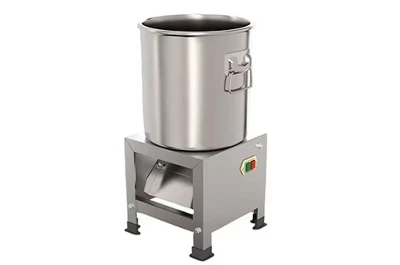

If you’ve ever spent long hours chopping feed for livestock at dawn, you know how much of a game-changer a good feed chopper can be. I’ve been in the feed equipment game for over a decade, so I’ve seen this tool evolve from clunky, one-note machines that took forever to run to smart, versatile gear that actually saves farmers time and cash. The last five years have been wild for tech innovations in feed choppers—way more than I ever thought possible, and today I wanna break down what’s actually worth talking about (no boring jargon, promise).
First off, let’s talk about the biggest pain point most folks had before: inconsistency. Back in the day, if you ran hay or corn stover through a chopper, half the stuff would be way too long (livestock wouldn’t eat it, or it would sit and rot) and half would be mushy, uneven shreds that went to waste. But recent tech has fixed that with precision cutting systems. The new generation of choppers uses calibrated helical blades instead of the old flat, straight blades. These helical blades rotate at a consistent angle, so every single piece of feed gets cut to the exact length you set—no more random chunks. I’ve tested a few of these myself, and let me tell you, you can go from 1-inch pieces for goats to 2.5-inch for cows with the twist of a dial, not swapping out blades every time. That’s a huge win for anyone who raises multiple types of animals on their farm.
Then there’s the shift to electric and hybrid power, which has been a total game-changer for small to mid-sized operations. A few years ago, almost all choppers were gas-powered, which meant dealing with fumes, oil changes, and noisy engines that scared livestock (not to mention they guzzled fuel if you ran them for hours). Now, electric models like the Electric Forage Chopper are powerful enough to handle even heavy feeds like whole corn stalks, and they’re way quieter—like, you can run one in your backyard at 7 a.m. without waking the neighbors. What’s more, they don’t have that weird dip in power when you’re running thick, damp feed, which was a common issue with older electric choppers. For folks who don’t want to deal with gas maintenance, or who have small operations near residential areas, this is a no-brainer. And if you’re somewhere with inconsistent power, hybrid models that switch between electric and gas on the fly are another solid pick—you get the best of both worlds.
Another innovation that’s been blowing up lately is modular design. I remember when if your chopper’s blade got dull, you had to take the whole thing apart, grind the blade, and wait hours before you could use it again. Now, many modern feed choppers are built with tool-free, quick-change parts. You can swap out blades, screens, even the feed hopper in like 2 minutes flat. This is where the multifunctional stuff really shines—like if you need a machine that can chop forage, shred corn, even mix small batches of feed, the modular design lets you switch between tasks without buying a whole new machine. Check out our Multifunctional Feed Shredder if you’re looking for something that does it all—it works for hay, straw, even small branches, so you can use it year-round, not just when you’re prepping feed for winter.
For the tiny operations, like backyard homesteaders or folks with just a handful of goats or chickens, there’s been a huge push for compact, efficient models that don’t take up half the garage. The Mini Forage Chopper is a perfect example—this little guy fits on a countertop, runs on a regular 110V outlet, and can chop enough feed for 10-15 animals in like 10 minutes. A lot of people used to think mini choppers were weak, but the new ones have high-torque motors that handle even damp hay, no clogging. I’ve had a few homesteader customers tell me they used to spend 2 hours a day chopping feed by hand, and now they spend 10 minutes with the mini chopper and get the same (better) results. That’s the kind of small tech that makes a huge difference for people who don’t have big farms or big budgets.
Wait, let’s not sleep on smart tech, even for feed choppers. A lot of people don’t realize that some newer models have basic sensors built in that prevent overloading. If you stuff too much feed into the hopper at once, the sensor slows down the blade rotation instead of jamming the machine—no more panic when your kid dumps a whole bale of hay in there. Some even have simple LED screens that let you track how much feed you’ve chopped, how much power you’ve used, and when it’s time to sharpen the blades. It’s not like a full-on smart farm system, but it’s a little touch that takes the guesswork out of using the machine, especially if you’re new to running a farm.


I also wanna talk about feed waste, which is a huge hidden cost for a lot of farmers. Before, even with good choppers, if the feed was too fine, it would blow away in the wind or get trampled by livestock. The precision cutting tech I mentioned earlier cuts feed to a uniform size, so livestock eat almost all of it—like, my customers who switched to the new choppers say feed waste dropped by 20-30%. That’s not just “nice” — that’s actual money in your pocket. If you’re spending $500 a month on feed, cutting that by 25% is $125 back each month, which adds up fast.
If you’re just starting to shop around for a feed chopper, it’s easy to get overwhelmed by all the options. Let me break down a quick way to pick: if you’re a small homesteader or have 10 or fewer animals, go for the Mini Forage Chopper or even the Household Forage Chopper — they’re cheap, easy to use, and perfect for small loads. If you have a mid-sized farm (50-100 animals) and need to handle different types of feed, check out the Multifunctional Feed Shredder or the Multifunctional Farm Processor — these will save you from buying separate machines for chopping, shredding, and mixing. And if noise or emissions are a concern, the Electric Forage Chopper is hands down the best pick right now.
The best part about all these innovations is that they’re not just for big commercial farms. Ten years ago, small operators had to make do with whatever cheap choppers were on the market, which would break in a year or waste half the feed. Now, there’s tech that works for every size, every budget, and every need. I’ve seen first-hand how these tools take the backbreaking work out of chopping feed, so you can spend more time with your animals and less time working on your equipment.
If you’re ready to upgrade your feed chopper or just want to chat about what would work best for your setup, feel free to reach out and we can talk through the details. No pressure, no salesy garbage, just helping you find something that makes your farm life easier.
References:
- Agricultural Machinery Technology Report, 2022. Global Feed Processing Equipment Innovation Trends.
- Journal of Farm and Animal Science, 2023. Efficiency Improvements in Precision Feed Cutting Systems.
- Small-Scale Agriculture Equipment Association, 2024. Top Compact Feed Choppers for Homestead and Mid-Sized Farms.
- Energy Efficiency in Farm Equipment Database, 2023. Performance of Electric vs. Gas-Powered Feed Chopper Models.


