


Specifications, Compliance and Supplier Selection for Agricultural Machinery Importers
Prepared for importers, distributors and farm-equipment dealers sourcing from China | 2026 Edition
Feed Chopper Import Guide for Argentina and Chile (2026): Specifications, Compliance and Supplier Selection
Buying a feed chopper from China is the easy part. Getting a container of them released at Puerto Buenos Aires or San Antonio without a re-inspection hold is where most first-time importers lose a season. The two markets that matter most for compact feed processing equipment in South America - Argentina and Chile - are routinely described as one region in supplier quotations, but they run on different regulators, different documentation expectations and different electrical realities on the farm.
This guide is written for the buyer who already knows they need a feed chopper, a chaff cutter or a silage chopper, and now has to work out which specification will actually clear customs and run on the power available at the farm gate. It covers the electrical baseline, the compliance checklists for both countries, the machine-type selection logic, and the container and MOQ planning that determines your landed cost.
Why Argentina and Chile Are Not One Sourcing Market
The single most expensive mistake in this category is treating "South America" as a specification. A quotation that says "suitable for South America" tells you nothing about whether the unit will pass a Chilean electrical inspection or whether the importer has budgeted for an Argentine phytosanitary step.
The practical differences that change your order are these:
- Regulator. Argentina routes agricultural machinery through SENASA for agri-food and phytosanitary oversight and AFIP for customs valuation and duty. Chile has no SENASA equivalent for machinery, but places electrical safety responsibility on SEC for products in scope, and rewards a correct certificate of origin under its free-trade-agreement framework.
- Documentation language. Both markets expect Spanish-language commercial and technical documentation. An English-only nameplate and manual is a frequent cause of delay in Argentina and a routine objection in Chile.
- Tariff treatment. Argentina applies the Mercosur Common External Tariff (CET) with NCM classification driving the rate; Chile runs a comparatively open tariff where a valid certificate of origin can materially reduce the applied duty.
- Farm power. Both countries run 220V/50Hz as the dominant agricultural supply, but rural single-phase availability is the binding constraint on the farm. This is discussed in detail below because it decides which motor you can actually sell.
The commercial consequence: you cannot run one specification across both markets and expect the same acceptance rate. You run one base platform and vary the documentation pack, the nameplate and - where the customer's sites demand it - the motor configuration.
Electrical Specifications: Getting 220V/50Hz Single-Phase Right
Agricultural power in Argentina and Chile is 220V/50Hz. That part is straightforward. What is not straightforward is whether the machine should be built for single-phase or three-phase operation, and this is the specification that most often goes wrong.
A single factory's quotation will usually default to whatever motor it stocks. That default is frequently three-phase, because three-phase motors are cheaper per kilowatt and simpler to wind. It is also frequently unsellable to the smallholder segment, because a family farm or a rural workshop running off a domestic supply has single-phase 220V available and no three-phase connection.
Before confirming a feed chopper order for South America, settle these four points in writing:
- Phase. Single-phase 220V/50Hz for the smallholder and family-workshop segment. Three-phase only where the buyer has confirmed a three-phase supply at the installation site. If your catalogue is aimed at farms and rural workshops, treat single-phase as the default and three-phase as the option.
- Motor rating and duty. A 1.1–3 kW copper-wound induction motor covers most compact feed choppers in the 300–1500 kg/h band. Aluminum-wound motors are cheaper and run hotter; in a market where a machine may run for two hours continuously at peak season, copper winding is a legitimate specification talking point, not a marketing claim.
- Voltage tolerance. Rural supply in both countries fluctuates. Confirm the motor and control gear tolerate a realistic ±10% deviation rather than assuming a stable grid.
- Plug and cable. A plug that matches the destination standard, and a cable gauge sized for the motor's running current, not the cable the factory had in stock. Undersized cable is the most common cause of a machine that "works at the factory but not at the farm".
|
Specification discipline that protects you: never write a single fixed voltage and phase into a catalogue page or a quotation for a multi-country market. Write the platform as "configured to your destination electrical supply - 220V/50Hz single-phase or three-phase, confirmed at the time of order." This is the phrasing that keeps you out of a specification dispute and lets one platform serve several markets. |
Argentina Compliance Checklist for Feed Processing Machinery
Argentina is the more documentation-intensive of the two markets, and the burden is concentrated on whether the equipment is new or used. The following is the working checklist importers should confirm with their local customs broker before the order is placed, not after the container sails.
|
Step |
What it covers |
Who handles it |
|
Importer registration |
Importer registration and identification for import operations; customs broker engagement for valuation and clearance. |
Importer / local broker |
|
NCM classification |
Harmonised classification for feed processing and chaff-cutting machinery under the Mercosur tariff structure. This code drives the duty rate and any special control. |
Local broker |
|
Phytosanitary step |
SENASA oversight of agri-food-relevant equipment. For new machinery the phytosanitary burden is materially lighter than for used units; used machinery normally requires a phytosanitary certificate from origin confirming the unit is free of soil and plant residue. |
Exporter + local broker |
|
Advance cargo declaration |
Electronic advance declaration filed through the customs system before vessel arrival. |
Local broker |
|
Technical documentation |
Manufacturer specification, parts list, and compliance documentation; IRAM technical standards referenced where applicable. |
Exporter |
|
Spanish documentation |
Commercial invoice, packing list and technical file consistent in quantity, weight and value, with Spanish-language technical material. |
Exporter |
|
Duty and VAT |
Import duty applied by equipment type and origin, plus VAT on most machinery. |
Importer |
The single highest-value decision in this table is new versus used. Used agricultural machinery triggers a heavier phytosanitary and inspection path, and in several South American jurisdictions used machinery can require a prior import licence with a demonstration that no equivalent locally produced machine exists. A new feed chopper removes that licence question entirely. For a distributor building a repeatable supply programme, new-unit sourcing is not only a quality decision - it is a customs-throughput decision.
Two practical points that reduce friction: keep the commercial invoice, packing list and bill of lading in exact agreement on quantities, weights and values, and confirm that any solid-wood packing is ISPM 15 compliant (heat-treated or fumigated and marked). Plywood and engineered crating are exempt, which is one reason suppliers increasingly ship in plywood cases.
Chile Compliance Checklist for Feed Processing Machinery
Chile is the lighter of the two markets procedurally, which makes it attractive for a first container - but "lighter" is not "nothing", and two items deserve attention before you commit.
|
Item |
What to confirm |
Why it matters |
|
Electrical safety |
Confirm whether the specific unit falls within SEC scope and what conformity evidence is expected at installation. Electrical conformity is verified in-country. |
A machine that clears customs can still fail at installation. |
|
Certificate of origin |
A correct certificate of origin can materially reduce the applied duty under Chile's trade-agreement framework. General and preferential origin documents are not interchangeable. |
Directly changes landed cost - worth checking before the order, not after. |
|
Documentation language |
Spanish-language commercial and technical documentation. |
Routine objection point when absent. |
|
Safety expectations |
Unit-level safety expectations applied at installation - guarding over the cutting chamber and feed opening, clearly marked stop control, and documented operating instructions. |
Guarding and labelling are the most commonly raised items. |
Because electrical conformity is verified in-country, the practical mitigation is documentation: a technical file that states the electrical configuration, motor rating and control arrangement clearly enough that an inspector or installing electrician can verify it without guesswork. Suppliers that ship a genuine technical file rather than a single-sheet spec slip reduce installation friction measurably.
Which Machine Type Fits Your Market
"Feed chopper" is a category, not a product. The four families below behave differently in the field, and a distributor's mix should be driven by what their customers actually grow and feed, not by what is easiest to stock.
|
Machine family |
Typical application |
Typical capacity band |
Best-fit buyer |
|
Feed cutting machine / chaff cutter |
Cutting green fodder, maize stalk, crop residue to short lengths for daily feeding. |
300–1500 kg/h |
Smallholder and family-farm daily feed preparation |
|
Forage chopper (incl. mini forage chopper) |
Compact chopping of fresh grass and forage; the entry point for mechanised feeding. |
300–1000 kg/h |
Smallest farms, rural households, pilot mechanisation |
|
Feed shredder (incl. wet and dry variants) |
Shredding wet vegetable matter and dry forage; higher moisture tolerance. |
400–1200 kg/h |
Mixed-feed workshops, farms handling vegetable waste |
|
Farm food processor / grinder |
Combined cutting and grinding; root crops, grain, beet pulp, multi-material processing. |
400–1500 kg/h |
Multi-material workshops, mixed livestock operations |
Two selection rules hold across both countries. First, match the machine to the material, not to the price list. A chopper sized for dry maize stalk will under-perform and clog on wet vegetable waste, and a wet-material shredder is not the right tool for long dry forage. Second, do not sell a capacity figure the buyer cannot use. A 1500 kg/h machine is the wrong recommendation for a farm that needs 150 kg/h; the buyer will run it at 10% of rating, consume power, and conclude the machine is poor value. The next section of this guide - capacity planning - is the antidote to that failure mode.
Container Planning and MOQ for a First Order
Compact feed choppers are dense, awkwardly shaped and heavy relative to their volume, which makes container planning unusually important in this category. A machine that fills the footprint of a pallet but weighs 70 kg will leave you paying for air.
Practical planning rules for a first South American container:
- Order in mixed models, not one model. A first container should test the market: split it across the two or three models most likely to sell, rather than committing the whole container to one specification.
- Confirm whether the unit ships assembled or knocked down. Partial knock-down with the frame and cutting chamber pre-assembled and the guards, hopper and wheels boxed separately commonly improves utilisation and reduces transit damage.
- Ask for carton and crate dimensions with the quotation, not after. Loading plan decisions depend on them, and 'we will advise' is not a loading plan.
- Plan spares into the first container. Blades, belts and the discharge screen are the consumables that drive repeat orders. A distributor who cannot supply a blade set in season loses the account to whoever can.
On minimum order quantity, the category convention is genuinely wide. Publicly quoted MOQs for chaff cutters and compact feed choppers range from a single set on the low end to fifty pieces on the high end, depending on model, customisation and whether the buyer wants OEM treatment. For a first order, a mid-range trial quantity with a clear statement of intent is normally enough to obtain trial pricing and a production slot.
The Sourcing Model Question: Single Factory or Multi-Factory Supplier
Once you have settled specification and compliance, the remaining decision is who you buy from, and this decision determines your price ceiling more than any negotiation tactic.
A single factory can offer you only its own product range, its own MOQ, and its own price. If the factory does not make the model your market wants, you either change your market or lose the sale. If the factory's production line is full, your delivery slips. If the factory's price for one specification is uncompetitive, you have no alternative.
A multi-factory sourcing partner works differently. Because the order is placed across a network of manufacturing partners, the buyer gains three things a single factory structurally cannot offer: a wider product range than one production line can produce, the ability to route an order to whichever partner is best equipped and least loaded, and consolidated volume pricing. The last point is the one that most directly affects a distributor's margin, and it is the one most often misunderstood.
Consolidated volume pricing works on a simple mechanism. Individual buyers place individual orders, each of which is small from the factory's point of view and therefore priced at the factory's standard rate. A sourcing partner aggregating volume across many buyers reaches rate levels, and priority production slots in peak season, that an individual buyer cannot access - including a buyer who contacts the factory directly. That is the practical reason a distributor can be quoted a better landed cost through a sourcing partner than through a direct factory enquiry, and it is worth verifying by running both quotations in parallel on your first order.
The trade-off is real and should be stated plainly: a sourcing partner is not a factory, and a buyer who needs an exclusive manufacturing relationship with a single line should buy from the factory. A buyer who needs range, flexibility and pricing across several specifications is better served by the network model.
The Compact Feed Chopper Range, and the Terms Buyers Get Wrong
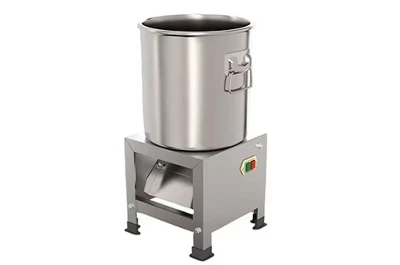
A complete feed chopper supplier catalogue for this market spans four working families, and a distributor's mix should cover all four rather than concentrate on whichever model happens to be cheapest to stock. The feed cutting machine - the classic chaff cutter - is the volume workhorse for daily ration preparation. The forage chopper, including the mini feed chopper and mini forage chopper built for the very smallest operations, is the entry point into mechanised feeding. The feed shredder, in wet and dry variants, handles the higher-moisture material a chopper struggles with. The combined farm food processor covers multi-material work where the input changes through the year.
Three sets of terms in this category are routinely used interchangeably and should not be. First, hay chopper and silage chopper describe configurations and material handling rather than separate machines: a hay chopper is set up for dry, long-stem material while a silage chopper is built for high-moisture fermented forage, and one platform can often serve both with the right cutting arrangement and feed throat. Second, feed chopper manufacturer and feed chopper supplier are not synonyms in commercial practice - a manufacturer makes what its own line produces, while a sourcing supplier can offer the wider range and route the order to whichever production partner is best equipped to build it. Third, a wholesale feed chopper order is not simply a large order: it is an order whose volume qualifies for tiered pricing, container loading and, where the buyer's own brand is involved, OEM feed chopper treatment.
For buyers searching feed chopper Argentina or chaff cutter Chile specifically, the practical difference between the two markets is the paperwork rather than the machine, as the compliance sections above set out. Across the wider feed chopper South America market the pattern repeats: one electrical and mechanical platform, configured to the destination supply, with the documentation pack and nameplate varied country by country. A bulk feed chopper programme therefore starts with a single platform decision and then multiplies through documentation, not through separate engineering.
Frequently Asked Questions
Do I need a different feed chopper for Argentina and for Chile?
Not for the machine itself. Both markets run 220V/50Hz, so a single electrical platform serves both. What differs is the documentation pack, the nameplate and - in Argentina - the phytosanitary handling of the shipment. Order one platform, vary the paperwork.
Should I specify single-phase or three-phase?
Single-phase 220V/50Hz is the safe default for the smallholder and family-workshop segment in both countries, because rural sites frequently have no three-phase connection. Specify three-phase only where the buyer has confirmed a three-phase supply at the installation site.
Does a new machine really avoid the SENASA phytosanitary burden?
The phytosanitary burden for new machinery is materially lighter than for used machinery, which normally requires a certificate from origin confirming the unit is free of soil and plant residue. New units also avoid the prior-import-licence question that used machinery can trigger in South America. Confirm the current position with your local broker, as procedures and thresholds change.
What is a realistic MOQ and lead time for a first order?
Category convention ranges from a single set to around fifty pieces depending on model and customisation. For a first container, a mid-range trial quantity with a stated intent for repeat volume is normally enough to obtain trial pricing. Lead times should be confirmed in writing per model, since customisation and peak-season loading both extend them.
How do I know the machine will handle local materials?
Send material samples or a clear description of the crop and its moisture state, and ask for a written throughput statement for that material. A capacity figure quoted without reference to material and moisture is not a specification - it is a marketing number.
Can you ship a mixed container of several models?
Yes, and for a first South American order a mixed container is the recommended approach: it tests two or three models in the market rather than committing the full container to one specification.
About the Supplier
Jiaxing Zenterest Import & Export Co., Ltd. is a China-based sourcing and export company established in 2017 in Jiaxing City, Zhejiang Province. We are an international trading and sourcing company - not a single factory, but a company built on long-term partnerships with a network of more than ten certified manufacturing partners across kitchen and bathroom appliances and agricultural machinery.
For feed and vegetable processing machinery, we supply feed cutting machines, forage choppers, feed shredders and farm food processors, with a strong focus on South America, particularly Argentina and Chile, where demand for reliable, cost-effective processing equipment continues to grow. Our team has spent over a decade building and maintaining factory relationships in this category, and the company operates with more than 100 staff and an annual turnover exceeding RMB 100 million - a scale that lets us consolidate order volume and negotiate rates that individual buyers cannot access.
Every partner factory is vetted before the first order and monitored afterwards, so buyers are protected from the quality risk of sourcing blind from an unfamiliar factory. We welcome OEM and private-label discussions, sample orders and factory visits arranged around a buyer's sourcing trip.
Key Takeaways
- Argentina and Chile are two different sourcing markets. One machine platform, two documentation packs.
- 220V/50Hz is the baseline; single-phase is the default for the smallholder segment, because rural sites often have no three-phase supply.
- New machinery clears more predictably than used, and avoids the prior-import-licence question used units can trigger in South America.
- Match machine family to material and moisture state, then size the machine to the actual daily feed requirement - not to the price list.
- Confirm carton and crate dimensions with the quotation; compact choppers are dense and container planning decides your landed cost.
- A multi-factory sourcing partner can reach consolidated volume pricing that an individual buyer cannot - verify it by running a parallel direct-factory quotation.
|
Request pricing, samples or a factory visit Email: bonnie.wu@zenterestvent.com WhatsApp / Phone: +86 185 0573 0567 Jiaxing Zenterest Import & Export Co., Ltd. - Room 101-3, Building 46, Zhifu Center, Gaozhao Subdistrict, Xiuzhou District, Jiaxing City, Zhejiang, China |


