

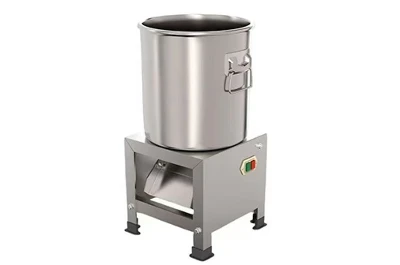

With the rapid development of modern livestock farming and food processing industries, feed and vegetable crushing machines have continuously evolved in their design philosophy as key pre-processing equipment. For international buyers, understanding this design philosophy helps better evaluate the technical level and application value of the equipment.
Efficiency-first design is one of the core principles. By optimizing blade structures and power systems, the machine enables fast cutting, tearing, and crushing of materials, significantly improving overall processing efficiency and meeting large-scale production requirements.
Structural stability design is fundamental to long-term operation. Thick steel frames and reinforced structures help reduce vibration and deformation during operation, enhancing durability and operational reliability.
Safety-oriented design is a key direction in modern equipment development. Feed and vegetable crushing machines are typically equipped with protective covers, emergency stop systems, and overload protection to ensure operator safety and reduce operational risks from both structural and control perspectives.
Multi-function adaptability design allows the machine to handle various materials. Whether vegetables, straw, forage, or organic waste, the equipment can efficiently process different inputs, expanding its application range and market adaptability.
Energy-saving design has become an important industry trend. By optimizing motor efficiency, blade angles, and transmission systems, energy consumption is reduced while maintaining high operational efficiency, achieving a balance between performance and cost control.
Easy maintenance design is integrated throughout the structure. Modular components, detachable blade systems, and user-friendly cleaning structures make daily maintenance and repair more efficient, reducing operating costs and extending service life.
Human-friendly design is increasingly becoming a standard. Simplified interfaces and control systems make the equipment easier to operate, reducing reliance on highly skilled operators.
Environmental protection and resource recycling design concepts are also being strengthened. Through efficient crushing and material reuse, agricultural waste utilization is improved, supporting green agriculture and circular economy development.
With the advancement of intelligent manufacturing and automation technologies, feed and vegetable crushing machines are gradually evolving toward intelligent control, integrated efficiency, and green energy-saving systems, making their design philosophy more systematic and modern.


