
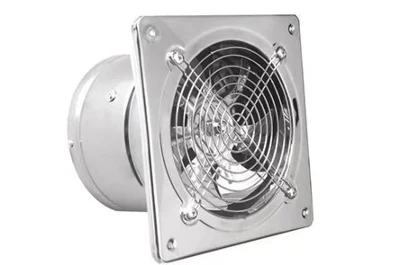
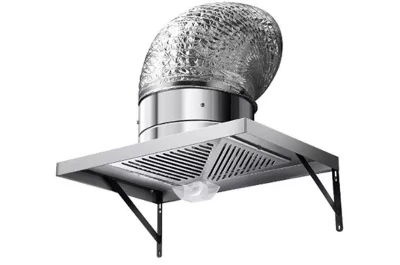

As global demand for industrial, commercial, and residential ventilation continues to grow, exhaust fan products have become increasingly diverse. For international buyers, selecting the right exhaust fan is not only essential for ventilation performance but also directly affects long-term operating costs and system stability. Therefore, understanding key selection criteria is crucial.
The first factor to consider is airflow capacity and its match with the application space. Different environments require different ventilation levels. Small bathrooms typically need low-airflow units, while factories and warehouses require high-capacity industrial exhaust fans. Proper matching ensures maximum efficiency while avoiding unnecessary energy waste.
Motor performance is one of the most critical selection criteria. High-quality exhaust fans are usually equipped with pure copper motors, offering stable operation, better heat dissipation, and longer service life. In industrial environments with continuous operation, motor quality directly impacts reliability and maintenance costs.
Energy efficiency is another important consideration in purchasing decisions. Energy-saving exhaust fans are designed with optimized motor structures and aerodynamic systems to maintain strong ventilation while reducing power consumption. For large-scale projects, long-term energy savings can significantly reduce overall operating costs.
Noise control capability is also essential, especially in offices, hotels, and residential environments. Low-noise operation enhances user comfort, and high-quality products often achieve quieter performance through improved blade design and vibration reduction structures.
Material quality and durability are key factors during selection. Industrial-grade exhaust fans are typically made of galvanized steel or stainless steel to withstand high temperatures, humidity, and corrosive environments, ensuring longer service life and fewer replacements.
Installation compatibility is another important consideration. Depending on project requirements, exhaust fans may need to be wall-mounted, window-mounted, ducted, or roof-installed. Proper planning based on building structure ensures easier installation and higher efficiency.
Safety performance should not be overlooked during procurement. Protective grille design, motor overheating protection, and compliance with electrical safety standards are all important indicators of product quality. Products that meet international standards are more suitable for export and engineering projects.
With the advancement of smart technology, some high-end exhaust fans now feature automatic speed control, temperature and humidity sensing, and remote operation. These functions allow the system to adjust automatically based on environmental conditions, improving overall energy efficiency.
In the future, as global demand for energy-saving and high-performance ventilation solutions continues to rise, efficient, low-energy, and intelligent exhaust fans will become the mainstream choice in the international procurement market.


